---
title: "Google Drive"
description: "Modeling Google Drive permissions"
canonical: "https://openfga.dev/docs/modeling/advanced/gdrive"
content_type: "documentation"
last_updated: "2026-09-09T07:21:48.000Z"
---
# Modeling Google Drive permissions with OpenFGA
This tutorial explains how to represent [Google Drive](https://www.google.com/intl/en-GB/drive/) permissions model with [OpenFGA](https://openfga.dev/docs/fga.md).
**What you will learn**
- Indicate [relationships](https://openfga.dev/docs/concepts.md#what-is-a-relationship) between a group of **[users](https://openfga.dev/docs/concepts.md#what-is-a-user)** and an **[object](https://openfga.dev/docs/concepts.md#what-is-an-object)**. See [Modeling User Groups](https://openfga.dev/docs/modeling/user-groups.md) for more.
Used here to indicate that all users within a domain can access a document (sharing a document within an organization).
- Model **concentric relationship** to have a certain [relation](https://openfga.dev/docs/concepts.md#what-is-a-relation) on an object imply another relation on the same object. See [Modeling Concepts: Concentric Relationships](https://openfga.dev/docs/modeling/building-blocks/concentric-relationships.md) for more.
Used here is to indicate that writers are also commenters and viewers.
- Using [**the union operator**](https://openfga.dev/docs/configuration-language.md#the-union-operator) condition to indicate that a user might have a certain relation with an object if they match any of the criteria indicated.
Used here to indicate that a user can be a viewer on a document, or can have the viewer relationship implied through commenter.
- Using the **[type bound public access](https://openfga.dev/docs/concepts.md#what-is-type-bound-public-access)** in a [relationship tuple's](https://openfga.dev/docs/concepts.md#what-is-a-relationship-tuple) user field to indicate that everyone has a certain relation with an object. See [Modeling Public Access](https://openfga.dev/docs/modeling/public-access.md) for more.
Used here to [share documents publicly](#04-sharing-files-and-folders-publicly).
- Model [**parent-child objects**](https://openfga.dev/docs/modeling/parent-child.md) to indicate that a user having a relationship with a certain object implies having a relationship with another object in OpenFGA.
Used here is to indicate that a writer on a folder is a writer on all documents inside that folder.
## Before you start
In order to understand this guide correctly you must be familiar with some OpenFGA concepts and know how to develop the things that we will list below.
### OpenFGA conceptsIt would be helpful to have an understanding of some concepts of OpenFGA before you start.
#### Modeling concentric relationships
You need to know how to update the authorization model to allow having nested relations such as all writers are readers. [Learn more →](https://openfga.dev/docs/modeling/building-blocks/concentric-relationships.md)
#### Modeling object-to-object relationships
You need to know how to create relationships between objects and how that might affect a user's relationships to those objects. [Learn more →](https://openfga.dev/docs/modeling/building-blocks/object-to-object-relationships.md)
Used here to indicate that users who have access to view a folder have access to view all documents inside it.
#### Modeling public access
You need to know how to add a relationship tuple to indicate that a resource is publicly available. [Learn more →](https://openfga.dev/docs/modeling/public-access.md)
#### Concepts & configuration language
- The [OpenFGA Concepts](https://openfga.dev/docs/concepts.md)
- [Configuration Language](https://openfga.dev/docs/configuration-language.md)
## What you will be modeling
Google Drive is a system to store, share, and collaborate on files and folders. [Source](https://www.google.com/drive/)
In this tutorial, you will build a subset of the Google Drive permission model (detailed below) in OpenFGA, using some scenarios to validate the model.
> Note: For brevity, this tutorial will not model all of Google Drive's permissions. Instead, it will focus on modeling for the scenarios outlined below
### Requirements
Google Drive's permission model is represented in [their documentation](https://developers.google.com/drive/api/v3/ref-roles).
In this tutorial, you will be focusing on a subset of these permissions.
Requirements:
- Users can be owners, editors, commenters and viewers of documents
- Documents can be shared with all users in a domain
- Folders can contain documents and users with a certain permission on a folder have that same permission to a document in that folder
- Documents and folders can be shared publicly
### Defined scenarios
There will be the following users:
- Anne, who is in the xyz domain
- Beth, who is in the xyz domain
- Charles, who is in the xyz domain
- Diane, who is NOT in the xyz domain
- Erik, who is NOT in the xyz domain
There will be:
- a 2021-budget document, owned by Anne, shared for commenting with Beth and viewable by all members of the xyz domain.
- a 2021-planning folder, viewable by Diane and contains the 2021-budget document
- a 2021-public-roadmap document, owned by Anne, available for members xyz domain to comment on and is publicly viewable
## Modeling Google Drive's permissions
### 01. Individual permissions
To keep thing simple and focus on OpenFGA features rather than Google Drive complexity we will model only four [roles](https://developers.google.com/drive/api/v3/ref-roles) (Viewer, Commenter, Writer, Owner).
At the end of this section we want to have the following permissions represented:
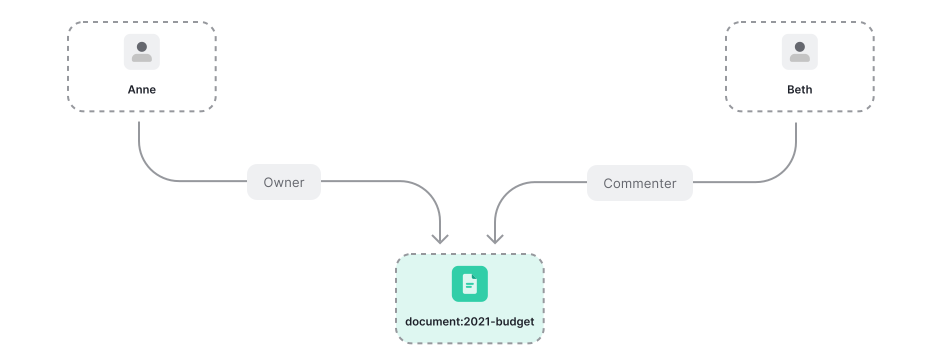
To represent permissions in OpenFGA we use [relations](https://openfga.dev/docs/concepts.md#what-is-a-relation). For document permissions we need to create the following [authorization model](https://openfga.dev/docs/concepts.md#what-is-an-authorization-model):
```
model
schema 1.1
type user
type document
relations
define owner: [user]
define writer: [user]
define commenter: [user]
define viewer: [user]
```
The OpenFGA service determines if a [user](https://openfga.dev/docs/concepts.md#what-is-a-user) has access to an [object](https://openfga.dev/docs/concepts.md#what-is-an-object) by [checking](https://openfga.dev/docs/concepts.md#what-is-a-check-request) if the user has a relation to that object. Let us examine one of those relations in detail:
```
type document
relations
define viewer: [user]
```
info
The snippet above indicates that objects of type document have users related to them as "viewer" if those users belong to the userset of all users related to the document as "viewer".
This means that a user can be [directly related](https://openfga.dev/docs/concepts.md#what-are-direct-and-implied-relationships) as a viewer to an object of type "document"
If we want to say `beth` is a commenter of **document:2021-budget** we create this relationship tuple:
- Node.js
- Go
- .NET
- Python
- Java
- curl
- CLI
- Pseudocode
Initialize the SDK
```
// ApiTokenIssuer, ApiAudience, ClientId and ClientSecret are optional.
// import the SDK
const { OpenFgaClient } = require('@openfga/sdk');
// Initialize the SDK with no auth - see "How to setup SDK client" for more options
const fgaClient = new OpenFgaClient({
apiUrl: process.env.FGA_API_URL, // required, e.g. https://api.fga.example
storeId: process.env.FGA_STORE_ID,
authorizationModelId: process.env.FGA_MODEL_ID, // Optional, can be overridden per request
});
```
```
const options = {
authorizationModelId: "01HVMMBCMGZNT3SED4Z17ECXCA",
};
await fgaClient.write({
writes: [
{"user":"user:beth","relation":"commenter","object":"document:2021-budget"}
],
}, options);
```
Initialize the SDK
```
// ApiTokenIssuer, ApiAudience, ClientId and ClientSecret are optional.
import (
"os"
. "github.com/openfga/go-sdk"
. "github.com/openfga/go-sdk/client"
)
func main() {
// Initialize the SDK with no auth - see "How to setup SDK client" for more options
fgaClient, err := NewSdkClient(&ClientConfiguration{
ApiUrl: os.Getenv("FGA_API_URL"), // required, e.g. https://api.fga.example
StoreId: os.Getenv("FGA_STORE_ID"), // optional, not needed for `CreateStore` and `ListStores`, required before calling for all other methods
AuthorizationModelId: os.Getenv("FGA_MODEL_ID"), // Optional, can be overridden per request
})
if err != nil {
// .. Handle error
}
}
```
```
options := ClientWriteOptions{
AuthorizationModelId: openfga.PtrString("01HVMMBCMGZNT3SED4Z17ECXCA"),
}
body := ClientWriteRequest{
Writes: []ClientTupleKey{
{
User: "user:beth",
Relation: "commenter",
Object: "document:2021-budget",
},
},
}
data, err := fgaClient.Write(context.Background()).
Body(body).
Options(options).
Execute()
if err != nil {
// .. Handle error
}
_ = data // use the response
```
Initialize the SDK
```
// ApiTokenIssuer, ApiAudience, ClientId and ClientSecret are optional.
// import the SDK
using OpenFga.Sdk.Client;
using OpenFga.Sdk.Client.Model;
using OpenFga.Sdk.Model;
using Environment = System.Environment;
namespace Example;
class Example {
public static async Task Main() {
// Initialize the SDK with no auth - see "How to setup SDK client" for more options
var configuration = new ClientConfiguration() {
ApiUrl = Environment.GetEnvironmentVariable("FGA_API_URL"), ?? "http://localhost:8080", // required, e.g. https://api.fga.example
StoreId = Environment.GetEnvironmentVariable("FGA_STORE_ID"), // optional, not needed for `CreateStore` and `ListStores`, required before calling for all other methods
AuthorizationModelId = Environment.GetEnvironmentVariable("FGA_MODEL_ID"), // Optional, can be overridden per request
};
var fgaClient = new OpenFgaClient(configuration);
}
}
```
```
var options = new ClientWriteOptions {
AuthorizationModelId = "01HVMMBCMGZNT3SED4Z17ECXCA",
};
var body = new ClientWriteRequest() {
Writes = new List() {
new() {
User = "user:beth",
Relation = "commenter",
Object = "document:2021-budget"
}
},
};
var response = await fgaClient.Write(body, options);
```
Initialize the SDK
```
# ApiTokenIssuer, ApiAudience, ClientId and ClientSecret are optional.
import asyncio
import os
import json
from openfga_sdk.client import ClientConfiguration, OpenFgaClient
async def main():
configuration = ClientConfiguration(
api_url = os.environ.get('FGA_API_URL'), # required, e.g. https://api.fga.example
store_id = os.environ.get('FGA_STORE_ID'), # optional, not needed for `CreateStore` and `ListStores`, required before calling for all other methods
authorization_model_id = os.environ.get('FGA_MODEL_ID'), # Optional, can be overridden per request
)
# Enter a context with an instance of the OpenFgaClient
async with OpenFgaClient(configuration) as fga_client:
api_response = await fga_client.read_authorization_models()
await fga_client.close()
asyncio.run(main())
```
```
options = {
"authorization_model_id": "01HVMMBCMGZNT3SED4Z17ECXCA"
}
body = ClientWriteRequest(
writes=[
ClientTuple(
user="user:beth",
relation="commenter",
object="document:2021-budget",
),
],
)
response = await fga_client.write(body, options)
```
Initialize the SDK
```
// ApiTokenIssuer, ApiAudience, ClientId and ClientSecret are optional.
import dev.openfga.sdk.api.client.OpenFgaClient;
import dev.openfga.sdk.api.configuration.ClientConfiguration;
public class Example {
public static void main(String[] args) throws Exception {
var config = new ClientConfiguration()
.apiUrl(System.getenv("FGA_API_URL")) // If not specified, will default to "https://localhost:8080"
.storeId(System.getenv("FGA_STORE_ID")) // Not required when calling createStore() or listStores()
.authorizationModelId(System.getenv("FGA_AUTHORIZATION_MODEL_ID")); // Optional, can be overridden per request
var fgaClient = new OpenFgaClient(config);
}
}
```
```
var options = new ClientWriteOptions()
.authorizationModelId("01HVMMBCMGZNT3SED4Z17ECXCA");
var body = new ClientWriteRequest()
.writes(List.of(
new ClientTupleKey()
.user("user:beth")
.relation("commenter")
._object("document:2021-budget")
));
var response = fgaClient.write(body, options).get();
```
Set FGA\_API\_URL according to the service you are using (e.g. https\://api.fga.example)
```
Set FGA_API_URL according to the service you are using (e.g. https://api.fga.example)
```
```
curl -X POST $FGA_API_URL/stores/$FGA_STORE_ID/write \
-H "Authorization: Bearer $FGA_API_TOKEN" \ # Not needed if service does not require authorization
-H "content-type: application/json" \
-d '{
"writes": {
"tuple_keys": [
{
"user": "user:beth",
"relation": "commenter",
"object": "document:2021-budget"
}
]
},
"authorization_model_id": "01HVMMBCMGZNT3SED4Z17ECXCA"
}'
```
Set FGA\_API\_URL according to the service you are using (e.g. https\://api.fga.example)
```
Set FGA_API_URL according to the service you are using (e.g. https://api.fga.example)
```
```
fga tuple write --store-id=${FGA_STORE_ID} --model-id=01HVMMBCMGZNT3SED4Z17ECXCA user:beth commenter document:2021-budget
```
```
write([
{
"user":"user:beth",
"relation":"commenter",
"object":"document:2021-budget"
}
])
```
We can now ask OpenFGA "is `beth` a commenter of repository **document:2021-budget**?"
- Node.js
- Go
- .NET
- Python
- Java
- CLI
- curl
- Pseudocode
- Playground
Initialize the SDK
```
// ApiTokenIssuer, ApiAudience, ClientId and ClientSecret are optional.
// import the SDK
const { OpenFgaClient } = require('@openfga/sdk');
// Initialize the SDK with no auth - see "How to setup SDK client" for more options
const fgaClient = new OpenFgaClient({
apiUrl: process.env.FGA_API_URL, // required, e.g. https://api.fga.example
storeId: process.env.FGA_STORE_ID,
authorizationModelId: process.env.FGA_MODEL_ID, // Optional, can be overridden per request
});
```
```
// Run a check
const { allowed } = await fgaClient.check({
user: 'user:beth',
relation: 'commenter',
object: 'document:2021-budget',
}, {
authorizationModelId: '01HVMMBCMGZNT3SED4Z17ECXCA',
});
// allowed = true
```
Initialize the SDK
```
// ApiTokenIssuer, ApiAudience, ClientId and ClientSecret are optional.
import (
"os"
. "github.com/openfga/go-sdk"
. "github.com/openfga/go-sdk/client"
)
func main() {
// Initialize the SDK with no auth - see "How to setup SDK client" for more options
fgaClient, err := NewSdkClient(&ClientConfiguration{
ApiUrl: os.Getenv("FGA_API_URL"), // required, e.g. https://api.fga.example
StoreId: os.Getenv("FGA_STORE_ID"), // optional, not needed for `CreateStore` and `ListStores`, required before calling for all other methods
AuthorizationModelId: os.Getenv("FGA_MODEL_ID"), // Optional, can be overridden per request
})
if err != nil {
// .. Handle error
}
}
```
```
options := ClientCheckOptions{
AuthorizationModelId: openfga.PtrString("01HVMMBCMGZNT3SED4Z17ECXCA"),
}
body := ClientCheckRequest{
User: "user:beth",
Relation: "commenter",
Object: "document:2021-budget",
}
data, err := fgaClient.Check(context.Background()).
Body(body).
Options(options).
Execute()
// data = { allowed: true }
```
Initialize the SDK
```
// ApiTokenIssuer, ApiAudience, ClientId and ClientSecret are optional.
// import the SDK
using OpenFga.Sdk.Client;
using OpenFga.Sdk.Client.Model;
using OpenFga.Sdk.Model;
using Environment = System.Environment;
namespace Example;
class Example {
public static async Task Main() {
// Initialize the SDK with no auth - see "How to setup SDK client" for more options
var configuration = new ClientConfiguration() {
ApiUrl = Environment.GetEnvironmentVariable("FGA_API_URL"), ?? "http://localhost:8080", // required, e.g. https://api.fga.example
StoreId = Environment.GetEnvironmentVariable("FGA_STORE_ID"), // optional, not needed for `CreateStore` and `ListStores`, required before calling for all other methods
AuthorizationModelId = Environment.GetEnvironmentVariable("FGA_MODEL_ID"), // Optional, can be overridden per request
};
var fgaClient = new OpenFgaClient(configuration);
}
}
```
```
var options = new ClientCheckOptions {
AuthorizationModelId = "01HVMMBCMGZNT3SED4Z17ECXCA"
};
var body = new ClientCheckRequest {
User = "user:beth",
Relation = "commenter",
Object = "document:2021-budget",
};
var response = await fgaClient.Check(body, options);
// response.Allowed = true
```
Initialize the SDK
```
# ApiTokenIssuer, ApiAudience, ClientId and ClientSecret are optional.
import asyncio
import os
import json
from openfga_sdk.client import ClientConfiguration, OpenFgaClient
async def main():
configuration = ClientConfiguration(
api_url = os.environ.get('FGA_API_URL'), # required, e.g. https://api.fga.example
store_id = os.environ.get('FGA_STORE_ID'), # optional, not needed for `CreateStore` and `ListStores`, required before calling for all other methods
authorization_model_id = os.environ.get('FGA_MODEL_ID'), # Optional, can be overridden per request
)
# Enter a context with an instance of the OpenFgaClient
async with OpenFgaClient(configuration) as fga_client:
api_response = await fga_client.read_authorization_models()
await fga_client.close()
asyncio.run(main())
```
```
options = {
"authorization_model_id": "01HVMMBCMGZNT3SED4Z17ECXCA",
}
body = ClientCheckRequest(
user="user:beth",
relation="commenter",
object="document:2021-budget",
)
response = await fga_client.check(body, options)
# response.allowed = true
```
Initialize the SDK
```
// ApiTokenIssuer, ApiAudience, ClientId and ClientSecret are optional.
import dev.openfga.sdk.api.client.OpenFgaClient;
import dev.openfga.sdk.api.configuration.ClientConfiguration;
public class Example {
public static void main(String[] args) throws Exception {
var config = new ClientConfiguration()
.apiUrl(System.getenv("FGA_API_URL")) // If not specified, will default to "https://localhost:8080"
.storeId(System.getenv("FGA_STORE_ID")) // Not required when calling createStore() or listStores()
.authorizationModelId(System.getenv("FGA_AUTHORIZATION_MODEL_ID")); // Optional, can be overridden per request
var fgaClient = new OpenFgaClient(config);
}
}
```
```
var options = new ClientCheckOptions()
.authorizationModelId("01HVMMBCMGZNT3SED4Z17ECXCA");
var body = new ClientCheckRequest()
.user("user:beth")
.relation("commenter")
._object("document:2021-budget");
var response = fgaClient.check(body, options).get();
// response.getAllowed() = true
```
Set FGA\_API\_URL according to the service you are using (e.g. https\://api.fga.example)
```
Set FGA_API_URL according to the service you are using (e.g. https://api.fga.example)
```
```
fga query check --store-id=$FGA_STORE_ID --model-id=01HVMMBCMGZNT3SED4Z17ECXCA user:beth commenter document:2021-budget
# Response: {"allowed":true}
```
Set FGA\_API\_URL according to the service you are using (e.g. https\://api.fga.example)
```
Set FGA_API_URL according to the service you are using (e.g. https://api.fga.example)
```
```
curl -X POST $FGA_API_URL/stores/$FGA_STORE_ID/check \
-H "Authorization: Bearer $FGA_API_TOKEN" \ # Not needed if service does not require authorization
-H "content-type: application/json" \
-d '{
"authorization_model_id": "01HVMMBCMGZNT3SED4Z17ECXCA",
"tuple_key": {
"user": "user:beth",
"relation": "commenter",
"object": "document:2021-budget"
}
}'
# Response: {"allowed": true}
```
```
check(
user = "user:beth", // check if the user `user:beth`
relation = "commenter", // has an `commenter` relation
object = "document:2021-budget", // with the object `document:2021-budget`
);
Reply: true
```
```
is user:beth related to document:2021-budget as commenter?
# Response: A green path from the user to the object indicating that the response from the API is `{"allowed":true}`
```
We could also say that `anne` is an owner of the same document:
- Node.js
- Go
- .NET
- Python
- Java
- curl
- CLI
- Pseudocode
Initialize the SDK
```
// ApiTokenIssuer, ApiAudience, ClientId and ClientSecret are optional.
// import the SDK
const { OpenFgaClient } = require('@openfga/sdk');
// Initialize the SDK with no auth - see "How to setup SDK client" for more options
const fgaClient = new OpenFgaClient({
apiUrl: process.env.FGA_API_URL, // required, e.g. https://api.fga.example
storeId: process.env.FGA_STORE_ID,
authorizationModelId: process.env.FGA_MODEL_ID, // Optional, can be overridden per request
});
```
```
const options = {
authorizationModelId: "01HVMMBCMGZNT3SED4Z17ECXCA",
};
await fgaClient.write({
writes: [
{"user":"user:anne","relation":"owner","object":"document:2021-budget"}
],
}, options);
```
Initialize the SDK
```
// ApiTokenIssuer, ApiAudience, ClientId and ClientSecret are optional.
import (
"os"
. "github.com/openfga/go-sdk"
. "github.com/openfga/go-sdk/client"
)
func main() {
// Initialize the SDK with no auth - see "How to setup SDK client" for more options
fgaClient, err := NewSdkClient(&ClientConfiguration{
ApiUrl: os.Getenv("FGA_API_URL"), // required, e.g. https://api.fga.example
StoreId: os.Getenv("FGA_STORE_ID"), // optional, not needed for `CreateStore` and `ListStores`, required before calling for all other methods
AuthorizationModelId: os.Getenv("FGA_MODEL_ID"), // Optional, can be overridden per request
})
if err != nil {
// .. Handle error
}
}
```
```
options := ClientWriteOptions{
AuthorizationModelId: openfga.PtrString("01HVMMBCMGZNT3SED4Z17ECXCA"),
}
body := ClientWriteRequest{
Writes: []ClientTupleKey{
{
User: "user:anne",
Relation: "owner",
Object: "document:2021-budget",
},
},
}
data, err := fgaClient.Write(context.Background()).
Body(body).
Options(options).
Execute()
if err != nil {
// .. Handle error
}
_ = data // use the response
```
Initialize the SDK
```
// ApiTokenIssuer, ApiAudience, ClientId and ClientSecret are optional.
// import the SDK
using OpenFga.Sdk.Client;
using OpenFga.Sdk.Client.Model;
using OpenFga.Sdk.Model;
using Environment = System.Environment;
namespace Example;
class Example {
public static async Task Main() {
// Initialize the SDK with no auth - see "How to setup SDK client" for more options
var configuration = new ClientConfiguration() {
ApiUrl = Environment.GetEnvironmentVariable("FGA_API_URL"), ?? "http://localhost:8080", // required, e.g. https://api.fga.example
StoreId = Environment.GetEnvironmentVariable("FGA_STORE_ID"), // optional, not needed for `CreateStore` and `ListStores`, required before calling for all other methods
AuthorizationModelId = Environment.GetEnvironmentVariable("FGA_MODEL_ID"), // Optional, can be overridden per request
};
var fgaClient = new OpenFgaClient(configuration);
}
}
```
```
var options = new ClientWriteOptions {
AuthorizationModelId = "01HVMMBCMGZNT3SED4Z17ECXCA",
};
var body = new ClientWriteRequest() {
Writes = new List() {
new() {
User = "user:anne",
Relation = "owner",
Object = "document:2021-budget"
}
},
};
var response = await fgaClient.Write(body, options);
```
Initialize the SDK
```
# ApiTokenIssuer, ApiAudience, ClientId and ClientSecret are optional.
import asyncio
import os
import json
from openfga_sdk.client import ClientConfiguration, OpenFgaClient
async def main():
configuration = ClientConfiguration(
api_url = os.environ.get('FGA_API_URL'), # required, e.g. https://api.fga.example
store_id = os.environ.get('FGA_STORE_ID'), # optional, not needed for `CreateStore` and `ListStores`, required before calling for all other methods
authorization_model_id = os.environ.get('FGA_MODEL_ID'), # Optional, can be overridden per request
)
# Enter a context with an instance of the OpenFgaClient
async with OpenFgaClient(configuration) as fga_client:
api_response = await fga_client.read_authorization_models()
await fga_client.close()
asyncio.run(main())
```
```
options = {
"authorization_model_id": "01HVMMBCMGZNT3SED4Z17ECXCA"
}
body = ClientWriteRequest(
writes=[
ClientTuple(
user="user:anne",
relation="owner",
object="document:2021-budget",
),
],
)
response = await fga_client.write(body, options)
```
Initialize the SDK
```
// ApiTokenIssuer, ApiAudience, ClientId and ClientSecret are optional.
import dev.openfga.sdk.api.client.OpenFgaClient;
import dev.openfga.sdk.api.configuration.ClientConfiguration;
public class Example {
public static void main(String[] args) throws Exception {
var config = new ClientConfiguration()
.apiUrl(System.getenv("FGA_API_URL")) // If not specified, will default to "https://localhost:8080"
.storeId(System.getenv("FGA_STORE_ID")) // Not required when calling createStore() or listStores()
.authorizationModelId(System.getenv("FGA_AUTHORIZATION_MODEL_ID")); // Optional, can be overridden per request
var fgaClient = new OpenFgaClient(config);
}
}
```
```
var options = new ClientWriteOptions()
.authorizationModelId("01HVMMBCMGZNT3SED4Z17ECXCA");
var body = new ClientWriteRequest()
.writes(List.of(
new ClientTupleKey()
.user("user:anne")
.relation("owner")
._object("document:2021-budget")
));
var response = fgaClient.write(body, options).get();
```
Set FGA\_API\_URL according to the service you are using (e.g. https\://api.fga.example)
```
Set FGA_API_URL according to the service you are using (e.g. https://api.fga.example)
```
```
curl -X POST $FGA_API_URL/stores/$FGA_STORE_ID/write \
-H "Authorization: Bearer $FGA_API_TOKEN" \ # Not needed if service does not require authorization
-H "content-type: application/json" \
-d '{
"writes": {
"tuple_keys": [
{
"user": "user:anne",
"relation": "owner",
"object": "document:2021-budget"
}
]
},
"authorization_model_id": "01HVMMBCMGZNT3SED4Z17ECXCA"
}'
```
Set FGA\_API\_URL according to the service you are using (e.g. https\://api.fga.example)
```
Set FGA_API_URL according to the service you are using (e.g. https://api.fga.example)
```
```
fga tuple write --store-id=${FGA_STORE_ID} --model-id=01HVMMBCMGZNT3SED4Z17ECXCA user:anne owner document:2021-budget
```
```
write([
{
"user":"user:anne",
"relation":"owner",
"object":"document:2021-budget"
}
])
```
And [ask](https://openfga.dev/docs/concepts.md#what-is-a-check-request) some questions to OpenFGA:
- Node.js
- Go
- .NET
- Python
- Java
- CLI
- curl
- Pseudocode
- Playground
Initialize the SDK
```
// ApiTokenIssuer, ApiAudience, ClientId and ClientSecret are optional.
// import the SDK
const { OpenFgaClient } = require('@openfga/sdk');
// Initialize the SDK with no auth - see "How to setup SDK client" for more options
const fgaClient = new OpenFgaClient({
apiUrl: process.env.FGA_API_URL, // required, e.g. https://api.fga.example
storeId: process.env.FGA_STORE_ID,
authorizationModelId: process.env.FGA_MODEL_ID, // Optional, can be overridden per request
});
```
```
// Run a check
const { allowed } = await fgaClient.check({
user: 'user:anne',
relation: 'owner',
object: 'document:2021-budget',
}, {
authorizationModelId: '01HVMMBCMGZNT3SED4Z17ECXCA',
});
// allowed = true
```
Initialize the SDK
```
// ApiTokenIssuer, ApiAudience, ClientId and ClientSecret are optional.
import (
"os"
. "github.com/openfga/go-sdk"
. "github.com/openfga/go-sdk/client"
)
func main() {
// Initialize the SDK with no auth - see "How to setup SDK client" for more options
fgaClient, err := NewSdkClient(&ClientConfiguration{
ApiUrl: os.Getenv("FGA_API_URL"), // required, e.g. https://api.fga.example
StoreId: os.Getenv("FGA_STORE_ID"), // optional, not needed for `CreateStore` and `ListStores`, required before calling for all other methods
AuthorizationModelId: os.Getenv("FGA_MODEL_ID"), // Optional, can be overridden per request
})
if err != nil {
// .. Handle error
}
}
```
```
options := ClientCheckOptions{
AuthorizationModelId: openfga.PtrString("01HVMMBCMGZNT3SED4Z17ECXCA"),
}
body := ClientCheckRequest{
User: "user:anne",
Relation: "owner",
Object: "document:2021-budget",
}
data, err := fgaClient.Check(context.Background()).
Body(body).
Options(options).
Execute()
// data = { allowed: true }
```
Initialize the SDK
```
// ApiTokenIssuer, ApiAudience, ClientId and ClientSecret are optional.
// import the SDK
using OpenFga.Sdk.Client;
using OpenFga.Sdk.Client.Model;
using OpenFga.Sdk.Model;
using Environment = System.Environment;
namespace Example;
class Example {
public static async Task Main() {
// Initialize the SDK with no auth - see "How to setup SDK client" for more options
var configuration = new ClientConfiguration() {
ApiUrl = Environment.GetEnvironmentVariable("FGA_API_URL"), ?? "http://localhost:8080", // required, e.g. https://api.fga.example
StoreId = Environment.GetEnvironmentVariable("FGA_STORE_ID"), // optional, not needed for `CreateStore` and `ListStores`, required before calling for all other methods
AuthorizationModelId = Environment.GetEnvironmentVariable("FGA_MODEL_ID"), // Optional, can be overridden per request
};
var fgaClient = new OpenFgaClient(configuration);
}
}
```
```
var options = new ClientCheckOptions {
AuthorizationModelId = "01HVMMBCMGZNT3SED4Z17ECXCA"
};
var body = new ClientCheckRequest {
User = "user:anne",
Relation = "owner",
Object = "document:2021-budget",
};
var response = await fgaClient.Check(body, options);
// response.Allowed = true
```
Initialize the SDK
```
# ApiTokenIssuer, ApiAudience, ClientId and ClientSecret are optional.
import asyncio
import os
import json
from openfga_sdk.client import ClientConfiguration, OpenFgaClient
async def main():
configuration = ClientConfiguration(
api_url = os.environ.get('FGA_API_URL'), # required, e.g. https://api.fga.example
store_id = os.environ.get('FGA_STORE_ID'), # optional, not needed for `CreateStore` and `ListStores`, required before calling for all other methods
authorization_model_id = os.environ.get('FGA_MODEL_ID'), # Optional, can be overridden per request
)
# Enter a context with an instance of the OpenFgaClient
async with OpenFgaClient(configuration) as fga_client:
api_response = await fga_client.read_authorization_models()
await fga_client.close()
asyncio.run(main())
```
```
options = {
"authorization_model_id": "01HVMMBCMGZNT3SED4Z17ECXCA",
}
body = ClientCheckRequest(
user="user:anne",
relation="owner",
object="document:2021-budget",
)
response = await fga_client.check(body, options)
# response.allowed = true
```
Initialize the SDK
```
// ApiTokenIssuer, ApiAudience, ClientId and ClientSecret are optional.
import dev.openfga.sdk.api.client.OpenFgaClient;
import dev.openfga.sdk.api.configuration.ClientConfiguration;
public class Example {
public static void main(String[] args) throws Exception {
var config = new ClientConfiguration()
.apiUrl(System.getenv("FGA_API_URL")) // If not specified, will default to "https://localhost:8080"
.storeId(System.getenv("FGA_STORE_ID")) // Not required when calling createStore() or listStores()
.authorizationModelId(System.getenv("FGA_AUTHORIZATION_MODEL_ID")); // Optional, can be overridden per request
var fgaClient = new OpenFgaClient(config);
}
}
```
```
var options = new ClientCheckOptions()
.authorizationModelId("01HVMMBCMGZNT3SED4Z17ECXCA");
var body = new ClientCheckRequest()
.user("user:anne")
.relation("owner")
._object("document:2021-budget");
var response = fgaClient.check(body, options).get();
// response.getAllowed() = true
```
Set FGA\_API\_URL according to the service you are using (e.g. https\://api.fga.example)
```
Set FGA_API_URL according to the service you are using (e.g. https://api.fga.example)
```
```
fga query check --store-id=$FGA_STORE_ID --model-id=01HVMMBCMGZNT3SED4Z17ECXCA user:anne owner document:2021-budget
# Response: {"allowed":true}
```
Set FGA\_API\_URL according to the service you are using (e.g. https\://api.fga.example)
```
Set FGA_API_URL according to the service you are using (e.g. https://api.fga.example)
```
```
curl -X POST $FGA_API_URL/stores/$FGA_STORE_ID/check \
-H "Authorization: Bearer $FGA_API_TOKEN" \ # Not needed if service does not require authorization
-H "content-type: application/json" \
-d '{
"authorization_model_id": "01HVMMBCMGZNT3SED4Z17ECXCA",
"tuple_key": {
"user": "user:anne",
"relation": "owner",
"object": "document:2021-budget"
}
}'
# Response: {"allowed": true}
```
```
check(
user = "user:anne", // check if the user `user:anne`
relation = "owner", // has an `owner` relation
object = "document:2021-budget", // with the object `document:2021-budget`
);
Reply: true
```
```
is user:anne related to document:2021-budget as owner?
# Response: A green path from the user to the object indicating that the response from the API is `{"allowed":true}`
```
- Node.js
- Go
- .NET
- Python
- Java
- CLI
- curl
- Pseudocode
- Playground
Initialize the SDK
```
// ApiTokenIssuer, ApiAudience, ClientId and ClientSecret are optional.
// import the SDK
const { OpenFgaClient } = require('@openfga/sdk');
// Initialize the SDK with no auth - see "How to setup SDK client" for more options
const fgaClient = new OpenFgaClient({
apiUrl: process.env.FGA_API_URL, // required, e.g. https://api.fga.example
storeId: process.env.FGA_STORE_ID,
authorizationModelId: process.env.FGA_MODEL_ID, // Optional, can be overridden per request
});
```
```
// Run a check
const { allowed } = await fgaClient.check({
user: 'user:anne',
relation: 'writer',
object: 'document:2021-budget',
}, {
authorizationModelId: '01HVMMBCMGZNT3SED4Z17ECXCA',
});
// allowed = false
```
Initialize the SDK
```
// ApiTokenIssuer, ApiAudience, ClientId and ClientSecret are optional.
import (
"os"
. "github.com/openfga/go-sdk"
. "github.com/openfga/go-sdk/client"
)
func main() {
// Initialize the SDK with no auth - see "How to setup SDK client" for more options
fgaClient, err := NewSdkClient(&ClientConfiguration{
ApiUrl: os.Getenv("FGA_API_URL"), // required, e.g. https://api.fga.example
StoreId: os.Getenv("FGA_STORE_ID"), // optional, not needed for `CreateStore` and `ListStores`, required before calling for all other methods
AuthorizationModelId: os.Getenv("FGA_MODEL_ID"), // Optional, can be overridden per request
})
if err != nil {
// .. Handle error
}
}
```
```
options := ClientCheckOptions{
AuthorizationModelId: openfga.PtrString("01HVMMBCMGZNT3SED4Z17ECXCA"),
}
body := ClientCheckRequest{
User: "user:anne",
Relation: "writer",
Object: "document:2021-budget",
}
data, err := fgaClient.Check(context.Background()).
Body(body).
Options(options).
Execute()
// data = { allowed: false }
```
Initialize the SDK
```
// ApiTokenIssuer, ApiAudience, ClientId and ClientSecret are optional.
// import the SDK
using OpenFga.Sdk.Client;
using OpenFga.Sdk.Client.Model;
using OpenFga.Sdk.Model;
using Environment = System.Environment;
namespace Example;
class Example {
public static async Task Main() {
// Initialize the SDK with no auth - see "How to setup SDK client" for more options
var configuration = new ClientConfiguration() {
ApiUrl = Environment.GetEnvironmentVariable("FGA_API_URL"), ?? "http://localhost:8080", // required, e.g. https://api.fga.example
StoreId = Environment.GetEnvironmentVariable("FGA_STORE_ID"), // optional, not needed for `CreateStore` and `ListStores`, required before calling for all other methods
AuthorizationModelId = Environment.GetEnvironmentVariable("FGA_MODEL_ID"), // Optional, can be overridden per request
};
var fgaClient = new OpenFgaClient(configuration);
}
}
```
```
var options = new ClientCheckOptions {
AuthorizationModelId = "01HVMMBCMGZNT3SED4Z17ECXCA"
};
var body = new ClientCheckRequest {
User = "user:anne",
Relation = "writer",
Object = "document:2021-budget",
};
var response = await fgaClient.Check(body, options);
// response.Allowed = false
```
Initialize the SDK
```
# ApiTokenIssuer, ApiAudience, ClientId and ClientSecret are optional.
import asyncio
import os
import json
from openfga_sdk.client import ClientConfiguration, OpenFgaClient
async def main():
configuration = ClientConfiguration(
api_url = os.environ.get('FGA_API_URL'), # required, e.g. https://api.fga.example
store_id = os.environ.get('FGA_STORE_ID'), # optional, not needed for `CreateStore` and `ListStores`, required before calling for all other methods
authorization_model_id = os.environ.get('FGA_MODEL_ID'), # Optional, can be overridden per request
)
# Enter a context with an instance of the OpenFgaClient
async with OpenFgaClient(configuration) as fga_client:
api_response = await fga_client.read_authorization_models()
await fga_client.close()
asyncio.run(main())
```
```
options = {
"authorization_model_id": "01HVMMBCMGZNT3SED4Z17ECXCA",
}
body = ClientCheckRequest(
user="user:anne",
relation="writer",
object="document:2021-budget",
)
response = await fga_client.check(body, options)
# response.allowed = false
```
Initialize the SDK
```
// ApiTokenIssuer, ApiAudience, ClientId and ClientSecret are optional.
import dev.openfga.sdk.api.client.OpenFgaClient;
import dev.openfga.sdk.api.configuration.ClientConfiguration;
public class Example {
public static void main(String[] args) throws Exception {
var config = new ClientConfiguration()
.apiUrl(System.getenv("FGA_API_URL")) // If not specified, will default to "https://localhost:8080"
.storeId(System.getenv("FGA_STORE_ID")) // Not required when calling createStore() or listStores()
.authorizationModelId(System.getenv("FGA_AUTHORIZATION_MODEL_ID")); // Optional, can be overridden per request
var fgaClient = new OpenFgaClient(config);
}
}
```
```
var options = new ClientCheckOptions()
.authorizationModelId("01HVMMBCMGZNT3SED4Z17ECXCA");
var body = new ClientCheckRequest()
.user("user:anne")
.relation("writer")
._object("document:2021-budget");
var response = fgaClient.check(body, options).get();
// response.getAllowed() = false
```
Set FGA\_API\_URL according to the service you are using (e.g. https\://api.fga.example)
```
Set FGA_API_URL according to the service you are using (e.g. https://api.fga.example)
```
```
fga query check --store-id=$FGA_STORE_ID --model-id=01HVMMBCMGZNT3SED4Z17ECXCA user:anne writer document:2021-budget
# Response: {"allowed":false}
```
Set FGA\_API\_URL according to the service you are using (e.g. https\://api.fga.example)
```
Set FGA_API_URL according to the service you are using (e.g. https://api.fga.example)
```
```
curl -X POST $FGA_API_URL/stores/$FGA_STORE_ID/check \
-H "Authorization: Bearer $FGA_API_TOKEN" \ # Not needed if service does not require authorization
-H "content-type: application/json" \
-d '{
"authorization_model_id": "01HVMMBCMGZNT3SED4Z17ECXCA",
"tuple_key": {
"user": "user:anne",
"relation": "writer",
"object": "document:2021-budget"
}
}'
# Response: {"allowed": false}
```
```
check(
user = "user:anne", // check if the user `user:anne`
relation = "writer", // has an `writer` relation
object = "document:2021-budget", // with the object `document:2021-budget`
);
Reply: false
```
```
is user:anne related to document:2021-budget as writer?
# Response: A red object indicating that the response from the API is `{"allowed":false}`
```
The first reply makes sense but the second one does not. Intuitively, if `anne` was an **owner**, she was also be a **writer**. In fact, Google Drive explains this in [their documentation](https://developers.google.com/drive/api/v3/ref-roles)
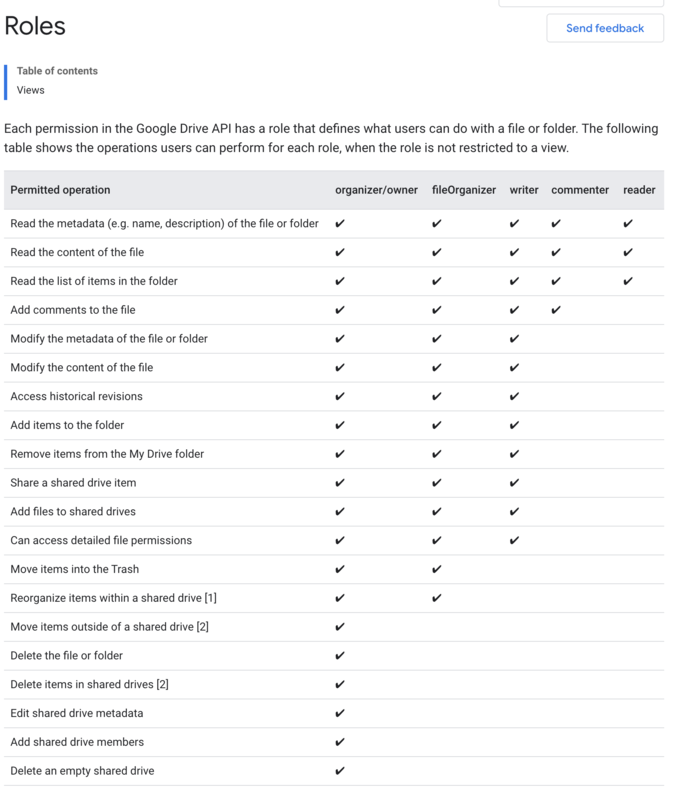
To make OpenFGA aware of this "concentric" permission model we need to update our definitions:
```
model
schema 1.1
type user
type document
relations
define owner: [user]
define writer: [user] or owner
define commenter: [user] or writer
define viewer: [user] or commenter
```
info
Let's examine one of those relations in detail:
objects of type document have users related to them as "viewer": if they belong to any of (the union of) the following:
- the userset of all users related to the document as "viewer"
- the userset of all users related to the document as "commenter"
With this update our model now supports nested definitions and now:
- Node.js
- Go
- .NET
- Python
- Java
- CLI
- curl
- Pseudocode
- Playground
Initialize the SDK
```
// ApiTokenIssuer, ApiAudience, ClientId and ClientSecret are optional.
// import the SDK
const { OpenFgaClient } = require('@openfga/sdk');
// Initialize the SDK with no auth - see "How to setup SDK client" for more options
const fgaClient = new OpenFgaClient({
apiUrl: process.env.FGA_API_URL, // required, e.g. https://api.fga.example
storeId: process.env.FGA_STORE_ID,
authorizationModelId: process.env.FGA_MODEL_ID, // Optional, can be overridden per request
});
```
```
// Run a check
const { allowed } = await fgaClient.check({
user: 'user:anne',
relation: 'owner',
object: 'document:2021-budget',
}, {
authorizationModelId: '01HVMMBCMGZNT3SED4Z17ECXCA',
});
// allowed = true
```
Initialize the SDK
```
// ApiTokenIssuer, ApiAudience, ClientId and ClientSecret are optional.
import (
"os"
. "github.com/openfga/go-sdk"
. "github.com/openfga/go-sdk/client"
)
func main() {
// Initialize the SDK with no auth - see "How to setup SDK client" for more options
fgaClient, err := NewSdkClient(&ClientConfiguration{
ApiUrl: os.Getenv("FGA_API_URL"), // required, e.g. https://api.fga.example
StoreId: os.Getenv("FGA_STORE_ID"), // optional, not needed for `CreateStore` and `ListStores`, required before calling for all other methods
AuthorizationModelId: os.Getenv("FGA_MODEL_ID"), // Optional, can be overridden per request
})
if err != nil {
// .. Handle error
}
}
```
```
options := ClientCheckOptions{
AuthorizationModelId: openfga.PtrString("01HVMMBCMGZNT3SED4Z17ECXCA"),
}
body := ClientCheckRequest{
User: "user:anne",
Relation: "owner",
Object: "document:2021-budget",
}
data, err := fgaClient.Check(context.Background()).
Body(body).
Options(options).
Execute()
// data = { allowed: true }
```
Initialize the SDK
```
// ApiTokenIssuer, ApiAudience, ClientId and ClientSecret are optional.
// import the SDK
using OpenFga.Sdk.Client;
using OpenFga.Sdk.Client.Model;
using OpenFga.Sdk.Model;
using Environment = System.Environment;
namespace Example;
class Example {
public static async Task Main() {
// Initialize the SDK with no auth - see "How to setup SDK client" for more options
var configuration = new ClientConfiguration() {
ApiUrl = Environment.GetEnvironmentVariable("FGA_API_URL"), ?? "http://localhost:8080", // required, e.g. https://api.fga.example
StoreId = Environment.GetEnvironmentVariable("FGA_STORE_ID"), // optional, not needed for `CreateStore` and `ListStores`, required before calling for all other methods
AuthorizationModelId = Environment.GetEnvironmentVariable("FGA_MODEL_ID"), // Optional, can be overridden per request
};
var fgaClient = new OpenFgaClient(configuration);
}
}
```
```
var options = new ClientCheckOptions {
AuthorizationModelId = "01HVMMBCMGZNT3SED4Z17ECXCA"
};
var body = new ClientCheckRequest {
User = "user:anne",
Relation = "owner",
Object = "document:2021-budget",
};
var response = await fgaClient.Check(body, options);
// response.Allowed = true
```
Initialize the SDK
```
# ApiTokenIssuer, ApiAudience, ClientId and ClientSecret are optional.
import asyncio
import os
import json
from openfga_sdk.client import ClientConfiguration, OpenFgaClient
async def main():
configuration = ClientConfiguration(
api_url = os.environ.get('FGA_API_URL'), # required, e.g. https://api.fga.example
store_id = os.environ.get('FGA_STORE_ID'), # optional, not needed for `CreateStore` and `ListStores`, required before calling for all other methods
authorization_model_id = os.environ.get('FGA_MODEL_ID'), # Optional, can be overridden per request
)
# Enter a context with an instance of the OpenFgaClient
async with OpenFgaClient(configuration) as fga_client:
api_response = await fga_client.read_authorization_models()
await fga_client.close()
asyncio.run(main())
```
```
options = {
"authorization_model_id": "01HVMMBCMGZNT3SED4Z17ECXCA",
}
body = ClientCheckRequest(
user="user:anne",
relation="owner",
object="document:2021-budget",
)
response = await fga_client.check(body, options)
# response.allowed = true
```
Initialize the SDK
```
// ApiTokenIssuer, ApiAudience, ClientId and ClientSecret are optional.
import dev.openfga.sdk.api.client.OpenFgaClient;
import dev.openfga.sdk.api.configuration.ClientConfiguration;
public class Example {
public static void main(String[] args) throws Exception {
var config = new ClientConfiguration()
.apiUrl(System.getenv("FGA_API_URL")) // If not specified, will default to "https://localhost:8080"
.storeId(System.getenv("FGA_STORE_ID")) // Not required when calling createStore() or listStores()
.authorizationModelId(System.getenv("FGA_AUTHORIZATION_MODEL_ID")); // Optional, can be overridden per request
var fgaClient = new OpenFgaClient(config);
}
}
```
```
var options = new ClientCheckOptions()
.authorizationModelId("01HVMMBCMGZNT3SED4Z17ECXCA");
var body = new ClientCheckRequest()
.user("user:anne")
.relation("owner")
._object("document:2021-budget");
var response = fgaClient.check(body, options).get();
// response.getAllowed() = true
```
Set FGA\_API\_URL according to the service you are using (e.g. https\://api.fga.example)
```
Set FGA_API_URL according to the service you are using (e.g. https://api.fga.example)
```
```
fga query check --store-id=$FGA_STORE_ID --model-id=01HVMMBCMGZNT3SED4Z17ECXCA user:anne owner document:2021-budget
# Response: {"allowed":true}
```
Set FGA\_API\_URL according to the service you are using (e.g. https\://api.fga.example)
```
Set FGA_API_URL according to the service you are using (e.g. https://api.fga.example)
```
```
curl -X POST $FGA_API_URL/stores/$FGA_STORE_ID/check \
-H "Authorization: Bearer $FGA_API_TOKEN" \ # Not needed if service does not require authorization
-H "content-type: application/json" \
-d '{
"authorization_model_id": "01HVMMBCMGZNT3SED4Z17ECXCA",
"tuple_key": {
"user": "user:anne",
"relation": "owner",
"object": "document:2021-budget"
}
}'
# Response: {"allowed": true}
```
```
check(
user = "user:anne", // check if the user `user:anne`
relation = "owner", // has an `owner` relation
object = "document:2021-budget", // with the object `document:2021-budget`
);
Reply: true
```
```
is user:anne related to document:2021-budget as owner?
# Response: A green path from the user to the object indicating that the response from the API is `{"allowed":true}`
```
- Node.js
- Go
- .NET
- Python
- Java
- CLI
- curl
- Pseudocode
- Playground
Initialize the SDK
```
// ApiTokenIssuer, ApiAudience, ClientId and ClientSecret are optional.
// import the SDK
const { OpenFgaClient } = require('@openfga/sdk');
// Initialize the SDK with no auth - see "How to setup SDK client" for more options
const fgaClient = new OpenFgaClient({
apiUrl: process.env.FGA_API_URL, // required, e.g. https://api.fga.example
storeId: process.env.FGA_STORE_ID,
authorizationModelId: process.env.FGA_MODEL_ID, // Optional, can be overridden per request
});
```
```
// Run a check
const { allowed } = await fgaClient.check({
user: 'user:anne',
relation: 'writer',
object: 'document:2021-budget',
}, {
authorizationModelId: '01HVMMBCMGZNT3SED4Z17ECXCA',
});
// allowed = true
```
Initialize the SDK
```
// ApiTokenIssuer, ApiAudience, ClientId and ClientSecret are optional.
import (
"os"
. "github.com/openfga/go-sdk"
. "github.com/openfga/go-sdk/client"
)
func main() {
// Initialize the SDK with no auth - see "How to setup SDK client" for more options
fgaClient, err := NewSdkClient(&ClientConfiguration{
ApiUrl: os.Getenv("FGA_API_URL"), // required, e.g. https://api.fga.example
StoreId: os.Getenv("FGA_STORE_ID"), // optional, not needed for `CreateStore` and `ListStores`, required before calling for all other methods
AuthorizationModelId: os.Getenv("FGA_MODEL_ID"), // Optional, can be overridden per request
})
if err != nil {
// .. Handle error
}
}
```
```
options := ClientCheckOptions{
AuthorizationModelId: openfga.PtrString("01HVMMBCMGZNT3SED4Z17ECXCA"),
}
body := ClientCheckRequest{
User: "user:anne",
Relation: "writer",
Object: "document:2021-budget",
}
data, err := fgaClient.Check(context.Background()).
Body(body).
Options(options).
Execute()
// data = { allowed: true }
```
Initialize the SDK
```
// ApiTokenIssuer, ApiAudience, ClientId and ClientSecret are optional.
// import the SDK
using OpenFga.Sdk.Client;
using OpenFga.Sdk.Client.Model;
using OpenFga.Sdk.Model;
using Environment = System.Environment;
namespace Example;
class Example {
public static async Task Main() {
// Initialize the SDK with no auth - see "How to setup SDK client" for more options
var configuration = new ClientConfiguration() {
ApiUrl = Environment.GetEnvironmentVariable("FGA_API_URL"), ?? "http://localhost:8080", // required, e.g. https://api.fga.example
StoreId = Environment.GetEnvironmentVariable("FGA_STORE_ID"), // optional, not needed for `CreateStore` and `ListStores`, required before calling for all other methods
AuthorizationModelId = Environment.GetEnvironmentVariable("FGA_MODEL_ID"), // Optional, can be overridden per request
};
var fgaClient = new OpenFgaClient(configuration);
}
}
```
```
var options = new ClientCheckOptions {
AuthorizationModelId = "01HVMMBCMGZNT3SED4Z17ECXCA"
};
var body = new ClientCheckRequest {
User = "user:anne",
Relation = "writer",
Object = "document:2021-budget",
};
var response = await fgaClient.Check(body, options);
// response.Allowed = true
```
Initialize the SDK
```
# ApiTokenIssuer, ApiAudience, ClientId and ClientSecret are optional.
import asyncio
import os
import json
from openfga_sdk.client import ClientConfiguration, OpenFgaClient
async def main():
configuration = ClientConfiguration(
api_url = os.environ.get('FGA_API_URL'), # required, e.g. https://api.fga.example
store_id = os.environ.get('FGA_STORE_ID'), # optional, not needed for `CreateStore` and `ListStores`, required before calling for all other methods
authorization_model_id = os.environ.get('FGA_MODEL_ID'), # Optional, can be overridden per request
)
# Enter a context with an instance of the OpenFgaClient
async with OpenFgaClient(configuration) as fga_client:
api_response = await fga_client.read_authorization_models()
await fga_client.close()
asyncio.run(main())
```
```
options = {
"authorization_model_id": "01HVMMBCMGZNT3SED4Z17ECXCA",
}
body = ClientCheckRequest(
user="user:anne",
relation="writer",
object="document:2021-budget",
)
response = await fga_client.check(body, options)
# response.allowed = true
```
Initialize the SDK
```
// ApiTokenIssuer, ApiAudience, ClientId and ClientSecret are optional.
import dev.openfga.sdk.api.client.OpenFgaClient;
import dev.openfga.sdk.api.configuration.ClientConfiguration;
public class Example {
public static void main(String[] args) throws Exception {
var config = new ClientConfiguration()
.apiUrl(System.getenv("FGA_API_URL")) // If not specified, will default to "https://localhost:8080"
.storeId(System.getenv("FGA_STORE_ID")) // Not required when calling createStore() or listStores()
.authorizationModelId(System.getenv("FGA_AUTHORIZATION_MODEL_ID")); // Optional, can be overridden per request
var fgaClient = new OpenFgaClient(config);
}
}
```
```
var options = new ClientCheckOptions()
.authorizationModelId("01HVMMBCMGZNT3SED4Z17ECXCA");
var body = new ClientCheckRequest()
.user("user:anne")
.relation("writer")
._object("document:2021-budget");
var response = fgaClient.check(body, options).get();
// response.getAllowed() = true
```
Set FGA\_API\_URL according to the service you are using (e.g. https\://api.fga.example)
```
Set FGA_API_URL according to the service you are using (e.g. https://api.fga.example)
```
```
fga query check --store-id=$FGA_STORE_ID --model-id=01HVMMBCMGZNT3SED4Z17ECXCA user:anne writer document:2021-budget
# Response: {"allowed":true}
```
Set FGA\_API\_URL according to the service you are using (e.g. https\://api.fga.example)
```
Set FGA_API_URL according to the service you are using (e.g. https://api.fga.example)
```
```
curl -X POST $FGA_API_URL/stores/$FGA_STORE_ID/check \
-H "Authorization: Bearer $FGA_API_TOKEN" \ # Not needed if service does not require authorization
-H "content-type: application/json" \
-d '{
"authorization_model_id": "01HVMMBCMGZNT3SED4Z17ECXCA",
"tuple_key": {
"user": "user:anne",
"relation": "writer",
"object": "document:2021-budget"
}
}'
# Response: {"allowed": true}
```
```
check(
user = "user:anne", // check if the user `user:anne`
relation = "writer", // has an `writer` relation
object = "document:2021-budget", // with the object `document:2021-budget`
);
Reply: true
```
```
is user:anne related to document:2021-budget as writer?
# Response: A green path from the user to the object indicating that the response from the API is `{"allowed":true}`
```
### 02. Organization permissions
Google Drive allows you to share a file with everyone in your organization as a viewer, commenter or writer/editor.
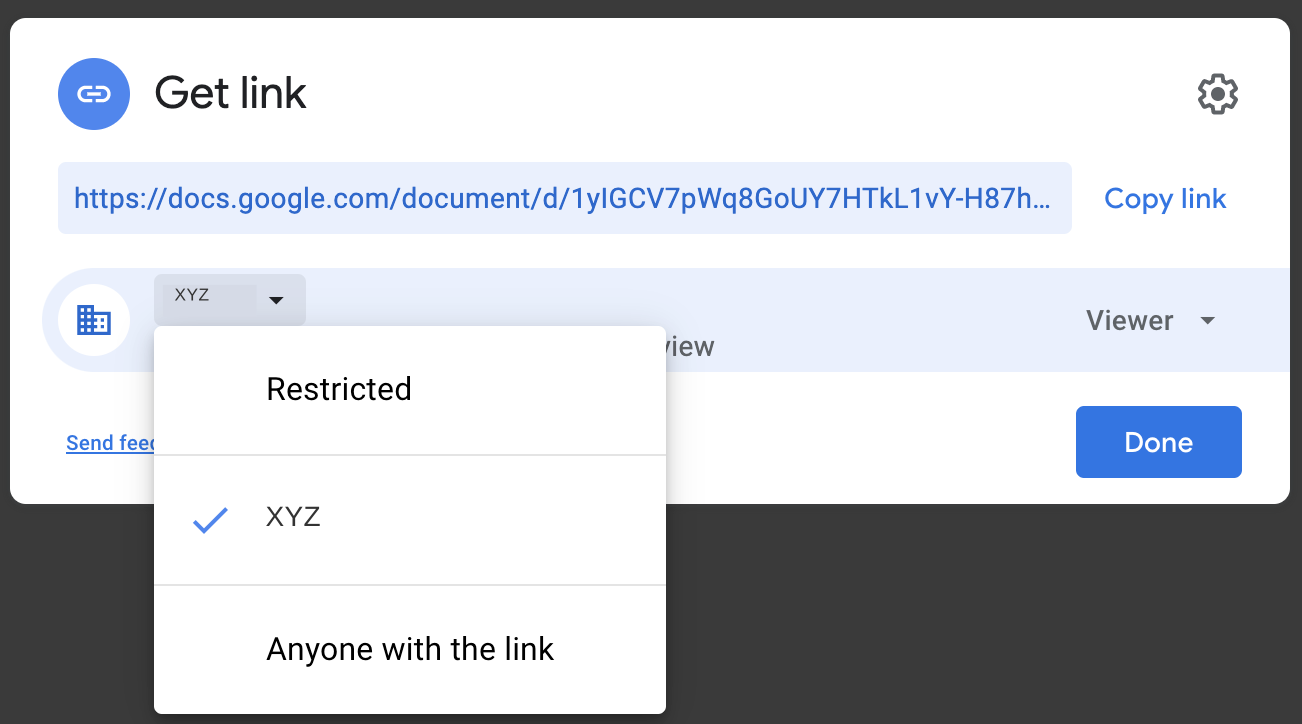
At the end of this section we want to end up with the following permissions represented:
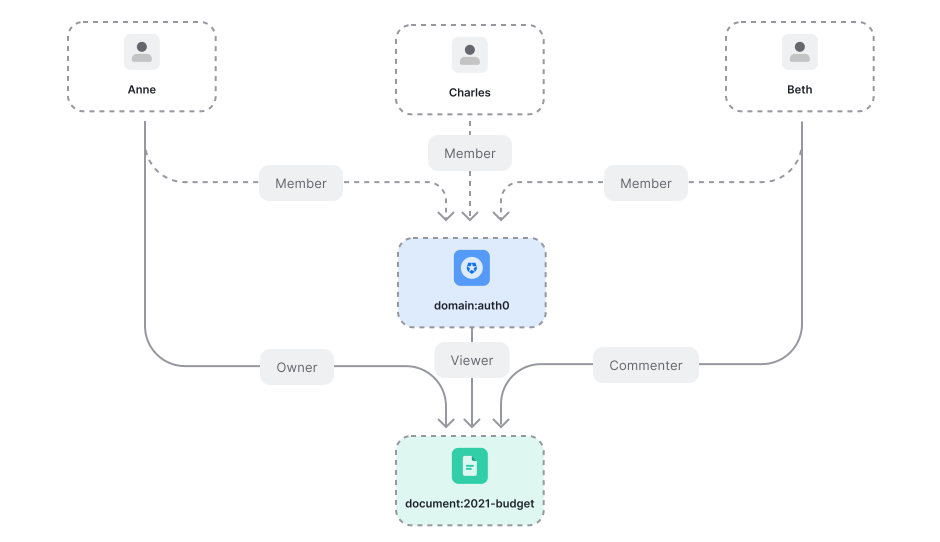
To add support for domains and members all we need to do is add this object to the [OpenFGA](https://openfga.dev/docs/fga.md) [authorization model](https://openfga.dev/docs/concepts.md#what-is-a-type-definition). In addition, update the model to allow domain member to be assigned to document:
```
model
schema 1.1
type user
type document
relations
define owner: [user, domain#member]
define writer: [user, domain#member] or owner
define commenter: [user, domain#member] or writer
define viewer: [user, domain#member] or commenter
type domain
relations
define member: [user]
```
info
Objects of type "domain" have users related to them as "member" if they belong to the userset of all users related to the domain as "member".
In other words, users can be direct members of a domain.
Let's now create a domain, add members to it and make all members **viewers** of **document:2021-budget**.
- Node.js
- Go
- .NET
- Python
- Java
- curl
- CLI
- Pseudocode
Initialize the SDK
```
// ApiTokenIssuer, ApiAudience, ClientId and ClientSecret are optional.
// import the SDK
const { OpenFgaClient } = require('@openfga/sdk');
// Initialize the SDK with no auth - see "How to setup SDK client" for more options
const fgaClient = new OpenFgaClient({
apiUrl: process.env.FGA_API_URL, // required, e.g. https://api.fga.example
storeId: process.env.FGA_STORE_ID,
authorizationModelId: process.env.FGA_MODEL_ID, // Optional, can be overridden per request
});
```
```
const options = {
authorizationModelId: "01HVMMBCMGZNT3SED4Z17ECXCA",
};
await fgaClient.write({
writes: [
// make anne, beth, charles a member of the xyz domain
{"_description":"make anne, beth, charles a member of the xyz domain","user":"user:anne","relation":"member","object":"domain:xyz"},
{"user":"user:beth","relation":"member","object":"domain:xyz"},
{"user":"user:charles","relation":"member","object":"domain:xyz"},
// make members of xyz domain viewers of document:2021-budget
{"_description":"make members of xyz domain viewers of document:2021-budget","user":"domain:xyz#member","relation":"viewer","object":"document:2021-budget"}
],
}, options);
```
Initialize the SDK
```
// ApiTokenIssuer, ApiAudience, ClientId and ClientSecret are optional.
import (
"os"
. "github.com/openfga/go-sdk"
. "github.com/openfga/go-sdk/client"
)
func main() {
// Initialize the SDK with no auth - see "How to setup SDK client" for more options
fgaClient, err := NewSdkClient(&ClientConfiguration{
ApiUrl: os.Getenv("FGA_API_URL"), // required, e.g. https://api.fga.example
StoreId: os.Getenv("FGA_STORE_ID"), // optional, not needed for `CreateStore` and `ListStores`, required before calling for all other methods
AuthorizationModelId: os.Getenv("FGA_MODEL_ID"), // Optional, can be overridden per request
})
if err != nil {
// .. Handle error
}
}
```
```
options := ClientWriteOptions{
AuthorizationModelId: openfga.PtrString("01HVMMBCMGZNT3SED4Z17ECXCA"),
}
body := ClientWriteRequest{
Writes: []ClientTupleKey{
{
// make anne, beth, charles a member of the xyz domain
User: "user:anne",
Relation: "member",
Object: "domain:xyz",
}, {
User: "user:beth",
Relation: "member",
Object: "domain:xyz",
}, {
User: "user:charles",
Relation: "member",
Object: "domain:xyz",
}, {
// make members of xyz domain viewers of document:2021-budget
User: "domain:xyz#member",
Relation: "viewer",
Object: "document:2021-budget",
},
},
}
data, err := fgaClient.Write(context.Background()).
Body(body).
Options(options).
Execute()
if err != nil {
// .. Handle error
}
_ = data // use the response
```
Initialize the SDK
```
// ApiTokenIssuer, ApiAudience, ClientId and ClientSecret are optional.
// import the SDK
using OpenFga.Sdk.Client;
using OpenFga.Sdk.Client.Model;
using OpenFga.Sdk.Model;
using Environment = System.Environment;
namespace Example;
class Example {
public static async Task Main() {
// Initialize the SDK with no auth - see "How to setup SDK client" for more options
var configuration = new ClientConfiguration() {
ApiUrl = Environment.GetEnvironmentVariable("FGA_API_URL"), ?? "http://localhost:8080", // required, e.g. https://api.fga.example
StoreId = Environment.GetEnvironmentVariable("FGA_STORE_ID"), // optional, not needed for `CreateStore` and `ListStores`, required before calling for all other methods
AuthorizationModelId = Environment.GetEnvironmentVariable("FGA_MODEL_ID"), // Optional, can be overridden per request
};
var fgaClient = new OpenFgaClient(configuration);
}
}
```
```
var options = new ClientWriteOptions {
AuthorizationModelId = "01HVMMBCMGZNT3SED4Z17ECXCA",
};
var body = new ClientWriteRequest() {
Writes = new List() {
// make anne, beth, charles a member of the xyz domain
new() {
User = "user:anne",
Relation = "member",
Object = "domain:xyz"
},
new() {
User = "user:beth",
Relation = "member",
Object = "domain:xyz"
},
new() {
User = "user:charles",
Relation = "member",
Object = "domain:xyz"
},
// make members of xyz domain viewers of document:2021-budget
new() {
User = "domain:xyz#member",
Relation = "viewer",
Object = "document:2021-budget"
}
},
};
var response = await fgaClient.Write(body, options);
```
Initialize the SDK
```
# ApiTokenIssuer, ApiAudience, ClientId and ClientSecret are optional.
import asyncio
import os
import json
from openfga_sdk.client import ClientConfiguration, OpenFgaClient
async def main():
configuration = ClientConfiguration(
api_url = os.environ.get('FGA_API_URL'), # required, e.g. https://api.fga.example
store_id = os.environ.get('FGA_STORE_ID'), # optional, not needed for `CreateStore` and `ListStores`, required before calling for all other methods
authorization_model_id = os.environ.get('FGA_MODEL_ID'), # Optional, can be overridden per request
)
# Enter a context with an instance of the OpenFgaClient
async with OpenFgaClient(configuration) as fga_client:
api_response = await fga_client.read_authorization_models()
await fga_client.close()
asyncio.run(main())
```
```
options = {
"authorization_model_id": "01HVMMBCMGZNT3SED4Z17ECXCA"
}
body = ClientWriteRequest(
writes=[
ClientTuple(
# make anne, beth, charles a member of the xyz domain
user="user:anne",
relation="member",
object="domain:xyz",
),
ClientTuple(
user="user:beth",
relation="member",
object="domain:xyz",
),
ClientTuple(
user="user:charles",
relation="member",
object="domain:xyz",
),
ClientTuple(
# make members of xyz domain viewers of document:2021-budget
user="domain:xyz#member",
relation="viewer",
object="document:2021-budget",
),
],
)
response = await fga_client.write(body, options)
```
Initialize the SDK
```
// ApiTokenIssuer, ApiAudience, ClientId and ClientSecret are optional.
import dev.openfga.sdk.api.client.OpenFgaClient;
import dev.openfga.sdk.api.configuration.ClientConfiguration;
public class Example {
public static void main(String[] args) throws Exception {
var config = new ClientConfiguration()
.apiUrl(System.getenv("FGA_API_URL")) // If not specified, will default to "https://localhost:8080"
.storeId(System.getenv("FGA_STORE_ID")) // Not required when calling createStore() or listStores()
.authorizationModelId(System.getenv("FGA_AUTHORIZATION_MODEL_ID")); // Optional, can be overridden per request
var fgaClient = new OpenFgaClient(config);
}
}
```
```
var options = new ClientWriteOptions()
.authorizationModelId("01HVMMBCMGZNT3SED4Z17ECXCA");
var body = new ClientWriteRequest()
.writes(List.of(
// make anne, beth, charles a member of the xyz domain
new ClientTupleKey()
.user("user:anne")
.relation("member")
._object("domain:xyz"),
new ClientTupleKey()
.user("user:beth")
.relation("member")
._object("domain:xyz"),
new ClientTupleKey()
.user("user:charles")
.relation("member")
._object("domain:xyz"),
// make members of xyz domain viewers of document:2021-budget
new ClientTupleKey()
.user("domain:xyz#member")
.relation("viewer")
._object("document:2021-budget")
));
var response = fgaClient.write(body, options).get();
```
Set FGA\_API\_URL according to the service you are using (e.g. https\://api.fga.example)
```
Set FGA_API_URL according to the service you are using (e.g. https://api.fga.example)
```
```
curl -X POST $FGA_API_URL/stores/$FGA_STORE_ID/write \
-H "Authorization: Bearer $FGA_API_TOKEN" \ # Not needed if service does not require authorization
-H "content-type: application/json" \
-d '{
"writes": {
"tuple_keys": [
{
"user": "user:anne",
"relation": "member",
"object": "domain:xyz"
},
{
"user": "user:beth",
"relation": "member",
"object": "domain:xyz"
},
{
"user": "user:charles",
"relation": "member",
"object": "domain:xyz"
},
{
"user": "domain:xyz#member",
"relation": "viewer",
"object": "document:2021-budget"
}
]
},
"authorization_model_id": "01HVMMBCMGZNT3SED4Z17ECXCA"
}'
```
Set FGA\_API\_URL according to the service you are using (e.g. https\://api.fga.example)
```
Set FGA_API_URL according to the service you are using (e.g. https://api.fga.example)
```
```
fga tuple write --store-id=${FGA_STORE_ID} --model-id=01HVMMBCMGZNT3SED4Z17ECXCA user:anne member domain:xyz
fga tuple write --store-id=${FGA_STORE_ID} --model-id=01HVMMBCMGZNT3SED4Z17ECXCA user:beth member domain:xyz
fga tuple write --store-id=${FGA_STORE_ID} --model-id=01HVMMBCMGZNT3SED4Z17ECXCA user:charles member domain:xyz
fga tuple write --store-id=${FGA_STORE_ID} --model-id=01HVMMBCMGZNT3SED4Z17ECXCA domain:xyz#member viewer document:2021-budget
```
```
write([
// make anne, beth, charles a member of the xyz domain
{
"user":"user:anne",
"relation":"member",
"object":"domain:xyz"
},
{
"user":"user:beth",
"relation":"member",
"object":"domain:xyz"
},
{
"user":"user:charles",
"relation":"member",
"object":"domain:xyz"
},
// make members of xyz domain viewers of document:2021-budget
{
"user":"domain:xyz#member",
"relation":"viewer",
"object":"document:2021-budget"
}
])
```
The last relationship tuple introduces a new **OpenFGA** concept. A **[userset](https://openfga.dev/docs/concepts.md#what-is-a-user)**. When the value of a user is formatted like this **objectType:objectId#relation**, OpenFGA will automatically expand the userset into all its individual user identifiers:
- Node.js
- Go
- .NET
- Python
- Java
- CLI
- curl
- Pseudocode
- Playground
Initialize the SDK
```
// ApiTokenIssuer, ApiAudience, ClientId and ClientSecret are optional.
// import the SDK
const { OpenFgaClient } = require('@openfga/sdk');
// Initialize the SDK with no auth - see "How to setup SDK client" for more options
const fgaClient = new OpenFgaClient({
apiUrl: process.env.FGA_API_URL, // required, e.g. https://api.fga.example
storeId: process.env.FGA_STORE_ID,
authorizationModelId: process.env.FGA_MODEL_ID, // Optional, can be overridden per request
});
```
```
// Run a check
const { allowed } = await fgaClient.check({
user: 'user:charles',
relation: 'viewer',
object: 'document:2021-budget',
}, {
authorizationModelId: '01HVMMBCMGZNT3SED4Z17ECXCA',
});
// allowed = true
```
Initialize the SDK
```
// ApiTokenIssuer, ApiAudience, ClientId and ClientSecret are optional.
import (
"os"
. "github.com/openfga/go-sdk"
. "github.com/openfga/go-sdk/client"
)
func main() {
// Initialize the SDK with no auth - see "How to setup SDK client" for more options
fgaClient, err := NewSdkClient(&ClientConfiguration{
ApiUrl: os.Getenv("FGA_API_URL"), // required, e.g. https://api.fga.example
StoreId: os.Getenv("FGA_STORE_ID"), // optional, not needed for `CreateStore` and `ListStores`, required before calling for all other methods
AuthorizationModelId: os.Getenv("FGA_MODEL_ID"), // Optional, can be overridden per request
})
if err != nil {
// .. Handle error
}
}
```
```
options := ClientCheckOptions{
AuthorizationModelId: openfga.PtrString("01HVMMBCMGZNT3SED4Z17ECXCA"),
}
body := ClientCheckRequest{
User: "user:charles",
Relation: "viewer",
Object: "document:2021-budget",
}
data, err := fgaClient.Check(context.Background()).
Body(body).
Options(options).
Execute()
// data = { allowed: true }
```
Initialize the SDK
```
// ApiTokenIssuer, ApiAudience, ClientId and ClientSecret are optional.
// import the SDK
using OpenFga.Sdk.Client;
using OpenFga.Sdk.Client.Model;
using OpenFga.Sdk.Model;
using Environment = System.Environment;
namespace Example;
class Example {
public static async Task Main() {
// Initialize the SDK with no auth - see "How to setup SDK client" for more options
var configuration = new ClientConfiguration() {
ApiUrl = Environment.GetEnvironmentVariable("FGA_API_URL"), ?? "http://localhost:8080", // required, e.g. https://api.fga.example
StoreId = Environment.GetEnvironmentVariable("FGA_STORE_ID"), // optional, not needed for `CreateStore` and `ListStores`, required before calling for all other methods
AuthorizationModelId = Environment.GetEnvironmentVariable("FGA_MODEL_ID"), // Optional, can be overridden per request
};
var fgaClient = new OpenFgaClient(configuration);
}
}
```
```
var options = new ClientCheckOptions {
AuthorizationModelId = "01HVMMBCMGZNT3SED4Z17ECXCA"
};
var body = new ClientCheckRequest {
User = "user:charles",
Relation = "viewer",
Object = "document:2021-budget",
};
var response = await fgaClient.Check(body, options);
// response.Allowed = true
```
Initialize the SDK
```
# ApiTokenIssuer, ApiAudience, ClientId and ClientSecret are optional.
import asyncio
import os
import json
from openfga_sdk.client import ClientConfiguration, OpenFgaClient
async def main():
configuration = ClientConfiguration(
api_url = os.environ.get('FGA_API_URL'), # required, e.g. https://api.fga.example
store_id = os.environ.get('FGA_STORE_ID'), # optional, not needed for `CreateStore` and `ListStores`, required before calling for all other methods
authorization_model_id = os.environ.get('FGA_MODEL_ID'), # Optional, can be overridden per request
)
# Enter a context with an instance of the OpenFgaClient
async with OpenFgaClient(configuration) as fga_client:
api_response = await fga_client.read_authorization_models()
await fga_client.close()
asyncio.run(main())
```
```
options = {
"authorization_model_id": "01HVMMBCMGZNT3SED4Z17ECXCA",
}
body = ClientCheckRequest(
user="user:charles",
relation="viewer",
object="document:2021-budget",
)
response = await fga_client.check(body, options)
# response.allowed = true
```
Initialize the SDK
```
// ApiTokenIssuer, ApiAudience, ClientId and ClientSecret are optional.
import dev.openfga.sdk.api.client.OpenFgaClient;
import dev.openfga.sdk.api.configuration.ClientConfiguration;
public class Example {
public static void main(String[] args) throws Exception {
var config = new ClientConfiguration()
.apiUrl(System.getenv("FGA_API_URL")) // If not specified, will default to "https://localhost:8080"
.storeId(System.getenv("FGA_STORE_ID")) // Not required when calling createStore() or listStores()
.authorizationModelId(System.getenv("FGA_AUTHORIZATION_MODEL_ID")); // Optional, can be overridden per request
var fgaClient = new OpenFgaClient(config);
}
}
```
```
var options = new ClientCheckOptions()
.authorizationModelId("01HVMMBCMGZNT3SED4Z17ECXCA");
var body = new ClientCheckRequest()
.user("user:charles")
.relation("viewer")
._object("document:2021-budget");
var response = fgaClient.check(body, options).get();
// response.getAllowed() = true
```
Set FGA\_API\_URL according to the service you are using (e.g. https\://api.fga.example)
```
Set FGA_API_URL according to the service you are using (e.g. https://api.fga.example)
```
```
fga query check --store-id=$FGA_STORE_ID --model-id=01HVMMBCMGZNT3SED4Z17ECXCA user:charles viewer document:2021-budget
# Response: {"allowed":true}
```
Set FGA\_API\_URL according to the service you are using (e.g. https\://api.fga.example)
```
Set FGA_API_URL according to the service you are using (e.g. https://api.fga.example)
```
```
curl -X POST $FGA_API_URL/stores/$FGA_STORE_ID/check \
-H "Authorization: Bearer $FGA_API_TOKEN" \ # Not needed if service does not require authorization
-H "content-type: application/json" \
-d '{
"authorization_model_id": "01HVMMBCMGZNT3SED4Z17ECXCA",
"tuple_key": {
"user": "user:charles",
"relation": "viewer",
"object": "document:2021-budget"
}
}'
# Response: {"allowed": true}
```
```
check(
user = "user:charles", // check if the user `user:charles`
relation = "viewer", // has an `viewer` relation
object = "document:2021-budget", // with the object `document:2021-budget`
);
Reply: true
```
```
is user:charles related to document:2021-budget as viewer?
# Response: A green path from the user to the object indicating that the response from the API is `{"allowed":true}`
```
### 03. Folder permission propagation
[Permission propagation](https://developers.google.com/drive/api/v3/manage-sharing#permission_propagation) happens between folders and files: if you are a viewer in a folder, you can view its documents. This applies even when you are not explicitly a viewer in a document. 
At the end of this section we want to end up with the following permissions represented. Note that a folder is an object in the **document** type, as we do not need a separate type:
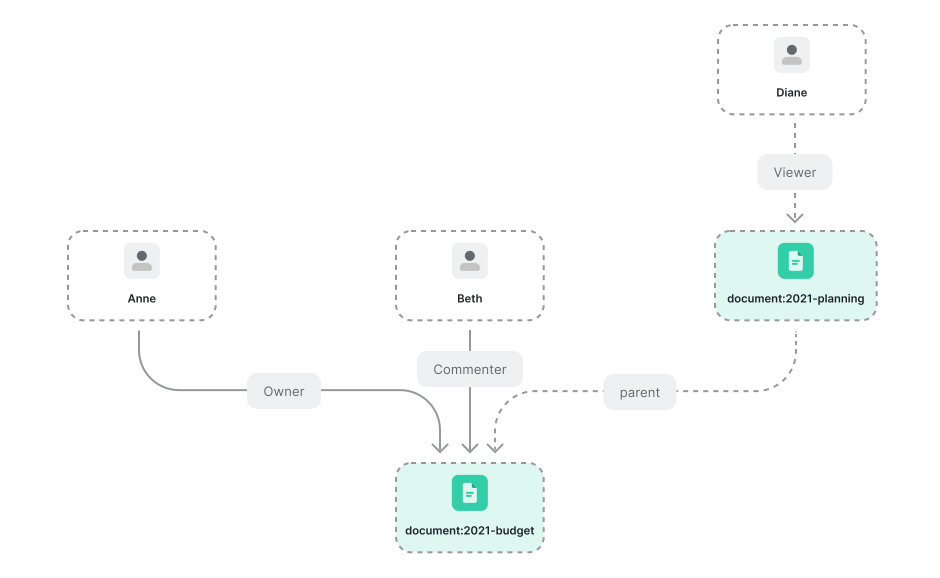
We need to add the notion that a **document** can be the **parent** of another **document**. We know how to do that:
```
model
schema 1.1
type user
type document
relations
define parent: [document]
define owner: [user, domain#member]
define writer: [user, domain#member] or owner
define commenter: [user, domain#member] or writer
define viewer: [user, domain#member] or commenter
```
info
Notice the newly added "parent" relation in the configuration above.
We can indicate this relation by adding the following relationship tuples
- Node.js
- Go
- .NET
- Python
- Java
- curl
- CLI
- Pseudocode
Initialize the SDK
```
// ApiTokenIssuer, ApiAudience, ClientId and ClientSecret are optional.
// import the SDK
const { OpenFgaClient } = require('@openfga/sdk');
// Initialize the SDK with no auth - see "How to setup SDK client" for more options
const fgaClient = new OpenFgaClient({
apiUrl: process.env.FGA_API_URL, // required, e.g. https://api.fga.example
storeId: process.env.FGA_STORE_ID,
authorizationModelId: process.env.FGA_MODEL_ID, // Optional, can be overridden per request
});
```
```
const options = {
authorizationModelId: "01HVMMBCMGZNT3SED4Z17ECXCA",
};
await fgaClient.write({
writes: [
// Diane is a viewer of document:2021-planning
{"_description":"Diane is a viewer of document:2021-planning","user":"user:diane","relation":"viewer","object":"document:2021-planning"},
// document:2021-planning is a parent of document:2021-budget
{"_description":"document:2021-planning is a parent of document:2021-budget","user":"document:2021-planning","relation":"parent","object":"document:2021-budget"}
],
}, options);
```
Initialize the SDK
```
// ApiTokenIssuer, ApiAudience, ClientId and ClientSecret are optional.
import (
"os"
. "github.com/openfga/go-sdk"
. "github.com/openfga/go-sdk/client"
)
func main() {
// Initialize the SDK with no auth - see "How to setup SDK client" for more options
fgaClient, err := NewSdkClient(&ClientConfiguration{
ApiUrl: os.Getenv("FGA_API_URL"), // required, e.g. https://api.fga.example
StoreId: os.Getenv("FGA_STORE_ID"), // optional, not needed for `CreateStore` and `ListStores`, required before calling for all other methods
AuthorizationModelId: os.Getenv("FGA_MODEL_ID"), // Optional, can be overridden per request
})
if err != nil {
// .. Handle error
}
}
```
```
options := ClientWriteOptions{
AuthorizationModelId: openfga.PtrString("01HVMMBCMGZNT3SED4Z17ECXCA"),
}
body := ClientWriteRequest{
Writes: []ClientTupleKey{
{
// Diane is a viewer of document:2021-planning
User: "user:diane",
Relation: "viewer",
Object: "document:2021-planning",
}, {
// document:2021-planning is a parent of document:2021-budget
User: "document:2021-planning",
Relation: "parent",
Object: "document:2021-budget",
},
},
}
data, err := fgaClient.Write(context.Background()).
Body(body).
Options(options).
Execute()
if err != nil {
// .. Handle error
}
_ = data // use the response
```
Initialize the SDK
```
// ApiTokenIssuer, ApiAudience, ClientId and ClientSecret are optional.
// import the SDK
using OpenFga.Sdk.Client;
using OpenFga.Sdk.Client.Model;
using OpenFga.Sdk.Model;
using Environment = System.Environment;
namespace Example;
class Example {
public static async Task Main() {
// Initialize the SDK with no auth - see "How to setup SDK client" for more options
var configuration = new ClientConfiguration() {
ApiUrl = Environment.GetEnvironmentVariable("FGA_API_URL"), ?? "http://localhost:8080", // required, e.g. https://api.fga.example
StoreId = Environment.GetEnvironmentVariable("FGA_STORE_ID"), // optional, not needed for `CreateStore` and `ListStores`, required before calling for all other methods
AuthorizationModelId = Environment.GetEnvironmentVariable("FGA_MODEL_ID"), // Optional, can be overridden per request
};
var fgaClient = new OpenFgaClient(configuration);
}
}
```
```
var options = new ClientWriteOptions {
AuthorizationModelId = "01HVMMBCMGZNT3SED4Z17ECXCA",
};
var body = new ClientWriteRequest() {
Writes = new List() {
// Diane is a viewer of document:2021-planning
new() {
User = "user:diane",
Relation = "viewer",
Object = "document:2021-planning"
},
// document:2021-planning is a parent of document:2021-budget
new() {
User = "document:2021-planning",
Relation = "parent",
Object = "document:2021-budget"
}
},
};
var response = await fgaClient.Write(body, options);
```
Initialize the SDK
```
# ApiTokenIssuer, ApiAudience, ClientId and ClientSecret are optional.
import asyncio
import os
import json
from openfga_sdk.client import ClientConfiguration, OpenFgaClient
async def main():
configuration = ClientConfiguration(
api_url = os.environ.get('FGA_API_URL'), # required, e.g. https://api.fga.example
store_id = os.environ.get('FGA_STORE_ID'), # optional, not needed for `CreateStore` and `ListStores`, required before calling for all other methods
authorization_model_id = os.environ.get('FGA_MODEL_ID'), # Optional, can be overridden per request
)
# Enter a context with an instance of the OpenFgaClient
async with OpenFgaClient(configuration) as fga_client:
api_response = await fga_client.read_authorization_models()
await fga_client.close()
asyncio.run(main())
```
```
options = {
"authorization_model_id": "01HVMMBCMGZNT3SED4Z17ECXCA"
}
body = ClientWriteRequest(
writes=[
ClientTuple(
# Diane is a viewer of document:2021-planning
user="user:diane",
relation="viewer",
object="document:2021-planning",
),
ClientTuple(
# document:2021-planning is a parent of document:2021-budget
user="document:2021-planning",
relation="parent",
object="document:2021-budget",
),
],
)
response = await fga_client.write(body, options)
```
Initialize the SDK
```
// ApiTokenIssuer, ApiAudience, ClientId and ClientSecret are optional.
import dev.openfga.sdk.api.client.OpenFgaClient;
import dev.openfga.sdk.api.configuration.ClientConfiguration;
public class Example {
public static void main(String[] args) throws Exception {
var config = new ClientConfiguration()
.apiUrl(System.getenv("FGA_API_URL")) // If not specified, will default to "https://localhost:8080"
.storeId(System.getenv("FGA_STORE_ID")) // Not required when calling createStore() or listStores()
.authorizationModelId(System.getenv("FGA_AUTHORIZATION_MODEL_ID")); // Optional, can be overridden per request
var fgaClient = new OpenFgaClient(config);
}
}
```
```
var options = new ClientWriteOptions()
.authorizationModelId("01HVMMBCMGZNT3SED4Z17ECXCA");
var body = new ClientWriteRequest()
.writes(List.of(
// Diane is a viewer of document:2021-planning
new ClientTupleKey()
.user("user:diane")
.relation("viewer")
._object("document:2021-planning"),
// document:2021-planning is a parent of document:2021-budget
new ClientTupleKey()
.user("document:2021-planning")
.relation("parent")
._object("document:2021-budget")
));
var response = fgaClient.write(body, options).get();
```
Set FGA\_API\_URL according to the service you are using (e.g. https\://api.fga.example)
```
Set FGA_API_URL according to the service you are using (e.g. https://api.fga.example)
```
```
curl -X POST $FGA_API_URL/stores/$FGA_STORE_ID/write \
-H "Authorization: Bearer $FGA_API_TOKEN" \ # Not needed if service does not require authorization
-H "content-type: application/json" \
-d '{
"writes": {
"tuple_keys": [
{
"user": "user:diane",
"relation": "viewer",
"object": "document:2021-planning"
},
{
"user": "document:2021-planning",
"relation": "parent",
"object": "document:2021-budget"
}
]
},
"authorization_model_id": "01HVMMBCMGZNT3SED4Z17ECXCA"
}'
```
Set FGA\_API\_URL according to the service you are using (e.g. https\://api.fga.example)
```
Set FGA_API_URL according to the service you are using (e.g. https://api.fga.example)
```
```
fga tuple write --store-id=${FGA_STORE_ID} --model-id=01HVMMBCMGZNT3SED4Z17ECXCA user:diane viewer document:2021-planning
fga tuple write --store-id=${FGA_STORE_ID} --model-id=01HVMMBCMGZNT3SED4Z17ECXCA document:2021-planning parent document:2021-budget
```
```
write([
// Diane is a viewer of document:2021-planning
{
"user":"user:diane",
"relation":"viewer",
"object":"document:2021-planning"
},
// document:2021-planning is a parent of document:2021-budget
{
"user":"document:2021-planning",
"relation":"parent",
"object":"document:2021-budget"
}
])
```
What we still lack is the ability to propagate permissions from parent to children. We want to say that a user is a viewer of a document if either:
- \[done] they have a viewer relationship (directly or through domain membership)
- \[pending] they have a viewer relationship with the parent document
We need a way to consider the parent viewers, not just direct viewers of the document when getting a check for:
- Node.js
- Go
- .NET
- Python
- Java
- CLI
- curl
- Pseudocode
- Playground
Initialize the SDK
```
// ApiTokenIssuer, ApiAudience, ClientId and ClientSecret are optional.
// import the SDK
const { OpenFgaClient } = require('@openfga/sdk');
// Initialize the SDK with no auth - see "How to setup SDK client" for more options
const fgaClient = new OpenFgaClient({
apiUrl: process.env.FGA_API_URL, // required, e.g. https://api.fga.example
storeId: process.env.FGA_STORE_ID,
authorizationModelId: process.env.FGA_MODEL_ID, // Optional, can be overridden per request
});
```
```
// Run a check
const { allowed } = await fgaClient.check({
user: 'user:diane',
relation: 'viewer',
object: 'document:2021-budget',
}, {
authorizationModelId: '01HVMMBCMGZNT3SED4Z17ECXCA',
});
// allowed = undefined
```
Initialize the SDK
```
// ApiTokenIssuer, ApiAudience, ClientId and ClientSecret are optional.
import (
"os"
. "github.com/openfga/go-sdk"
. "github.com/openfga/go-sdk/client"
)
func main() {
// Initialize the SDK with no auth - see "How to setup SDK client" for more options
fgaClient, err := NewSdkClient(&ClientConfiguration{
ApiUrl: os.Getenv("FGA_API_URL"), // required, e.g. https://api.fga.example
StoreId: os.Getenv("FGA_STORE_ID"), // optional, not needed for `CreateStore` and `ListStores`, required before calling for all other methods
AuthorizationModelId: os.Getenv("FGA_MODEL_ID"), // Optional, can be overridden per request
})
if err != nil {
// .. Handle error
}
}
```
```
options := ClientCheckOptions{
AuthorizationModelId: openfga.PtrString("01HVMMBCMGZNT3SED4Z17ECXCA"),
}
body := ClientCheckRequest{
User: "user:diane",
Relation: "viewer",
Object: "document:2021-budget",
}
data, err := fgaClient.Check(context.Background()).
Body(body).
Options(options).
Execute()
// data = { allowed: undefined }
```
Initialize the SDK
```
// ApiTokenIssuer, ApiAudience, ClientId and ClientSecret are optional.
// import the SDK
using OpenFga.Sdk.Client;
using OpenFga.Sdk.Client.Model;
using OpenFga.Sdk.Model;
using Environment = System.Environment;
namespace Example;
class Example {
public static async Task Main() {
// Initialize the SDK with no auth - see "How to setup SDK client" for more options
var configuration = new ClientConfiguration() {
ApiUrl = Environment.GetEnvironmentVariable("FGA_API_URL"), ?? "http://localhost:8080", // required, e.g. https://api.fga.example
StoreId = Environment.GetEnvironmentVariable("FGA_STORE_ID"), // optional, not needed for `CreateStore` and `ListStores`, required before calling for all other methods
AuthorizationModelId = Environment.GetEnvironmentVariable("FGA_MODEL_ID"), // Optional, can be overridden per request
};
var fgaClient = new OpenFgaClient(configuration);
}
}
```
```
var options = new ClientCheckOptions {
AuthorizationModelId = "01HVMMBCMGZNT3SED4Z17ECXCA"
};
var body = new ClientCheckRequest {
User = "user:diane",
Relation = "viewer",
Object = "document:2021-budget",
};
var response = await fgaClient.Check(body, options);
// response.Allowed = undefined
```
Initialize the SDK
```
# ApiTokenIssuer, ApiAudience, ClientId and ClientSecret are optional.
import asyncio
import os
import json
from openfga_sdk.client import ClientConfiguration, OpenFgaClient
async def main():
configuration = ClientConfiguration(
api_url = os.environ.get('FGA_API_URL'), # required, e.g. https://api.fga.example
store_id = os.environ.get('FGA_STORE_ID'), # optional, not needed for `CreateStore` and `ListStores`, required before calling for all other methods
authorization_model_id = os.environ.get('FGA_MODEL_ID'), # Optional, can be overridden per request
)
# Enter a context with an instance of the OpenFgaClient
async with OpenFgaClient(configuration) as fga_client:
api_response = await fga_client.read_authorization_models()
await fga_client.close()
asyncio.run(main())
```
```
options = {
"authorization_model_id": "01HVMMBCMGZNT3SED4Z17ECXCA",
}
body = ClientCheckRequest(
user="user:diane",
relation="viewer",
object="document:2021-budget",
)
response = await fga_client.check(body, options)
# response.allowed = undefined
```
Initialize the SDK
```
// ApiTokenIssuer, ApiAudience, ClientId and ClientSecret are optional.
import dev.openfga.sdk.api.client.OpenFgaClient;
import dev.openfga.sdk.api.configuration.ClientConfiguration;
public class Example {
public static void main(String[] args) throws Exception {
var config = new ClientConfiguration()
.apiUrl(System.getenv("FGA_API_URL")) // If not specified, will default to "https://localhost:8080"
.storeId(System.getenv("FGA_STORE_ID")) // Not required when calling createStore() or listStores()
.authorizationModelId(System.getenv("FGA_AUTHORIZATION_MODEL_ID")); // Optional, can be overridden per request
var fgaClient = new OpenFgaClient(config);
}
}
```
```
var options = new ClientCheckOptions()
.authorizationModelId("01HVMMBCMGZNT3SED4Z17ECXCA");
var body = new ClientCheckRequest()
.user("user:diane")
.relation("viewer")
._object("document:2021-budget");
var response = fgaClient.check(body, options).get();
// response.getAllowed() = undefined
```
Set FGA\_API\_URL according to the service you are using (e.g. https\://api.fga.example)
```
Set FGA_API_URL according to the service you are using (e.g. https://api.fga.example)
```
```
fga query check --store-id=$FGA_STORE_ID --model-id=01HVMMBCMGZNT3SED4Z17ECXCA user:diane viewer document:2021-budget
# Response: {"allowed":undefined}
```
Set FGA\_API\_URL according to the service you are using (e.g. https\://api.fga.example)
```
Set FGA_API_URL according to the service you are using (e.g. https://api.fga.example)
```
```
curl -X POST $FGA_API_URL/stores/$FGA_STORE_ID/check \
-H "Authorization: Bearer $FGA_API_TOKEN" \ # Not needed if service does not require authorization
-H "content-type: application/json" \
-d '{
"authorization_model_id": "01HVMMBCMGZNT3SED4Z17ECXCA",
"tuple_key": {
"user": "user:diane",
"relation": "viewer",
"object": "document:2021-budget"
}
}'
# Response: {"allowed": undefined}
```
```
check(
user = "user:diane", // check if the user `user:diane`
relation = "viewer", // has an `viewer` relation
object = "document:2021-budget", // with the object `document:2021-budget`
);
Reply: undefined
```
```
is user:diane related to document:2021-budget as viewer?
# Response: A red object indicating that the response from the API is `{"allowed":false}`
```
More details on this technique can be found in the section [Modeling Parent-Child Objects](https://openfga.dev/docs/modeling/parent-child.md).
We express it like this:
```
type document
relations
define viewer: [user, domain#member] or commenter or viewer from parent
```
info
The users with a viewer relationship to a certain object of type "document" are any of:
- the "viewers": the set of users who are [directly related](https://openfga.dev/docs/concepts.md#what-are-direct-and-implied-relationships) to the document as a "viewer"
- the "commenters": the set of users who are related to the object as "commenter"
- the "viewers of the parents": from the objects who are related to the doc as parent, return the sets of users who are related to those objects as "viewer"
What the added section is doing is:
1. read all relationship tuples related to document:2021-budget as parent which returns:
`[{ "object": "document:2021-budget", "relation": "parent", "user": "document:2021-planning" }]`
2. for each relationship tuple read, return all usersets that match the following, returning tuples of shape:
`{ "object": "document:2021-planning", "viewer", "user": ??? }`
including: `{ "object": "document:2021-planning", "viewer", "user": "user:diane" }`
The updated authorization model looks like this:
```
model
schema 1.1
type user
type document
relations
define owner: [user, domain#member] or owner from parent
define writer: [user, domain#member] or owner or writer from parent
define commenter: [user, domain#member] or writer or commenter from parent
define viewer: [user, domain#member] or commenter or viewer from parent
define parent: [document]
type domain
relations
define member: [user]
```
### 04. Sharing files and folders publicly
Google Drive has a feature which allows [sharing a file or folder publicly](https://support.google.com/a/users/answer/9308873?hl=en), and specifying the permissions a public user might have (writer/commenter/viewer).
Assume that `Anne` has created a new document: `2021-public-roadmap`, has shared it with commenter permissions to the `xyz.com`, and has shared it as view only with the public at large.
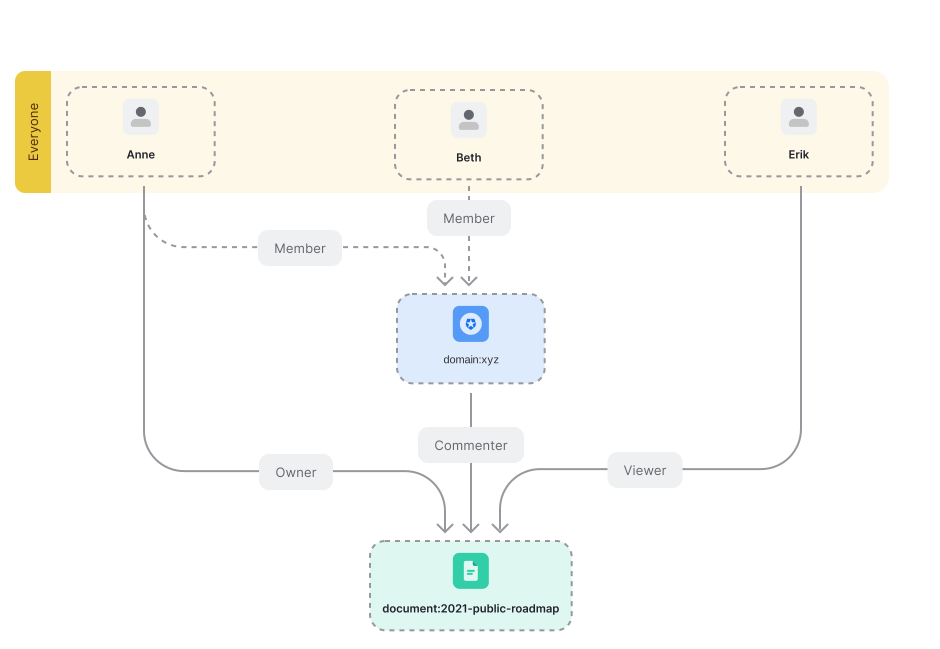
Here's where another OpenFGA feature, [type bound public access](https://openfga.dev/docs/concepts.md#what-is-type-bound-public-access) (as in everyone), would come in handy.
First, we will need to update our model to allow for public access with type `user` for viewer relation.
```
model
schema 1.1
type user
type document
relations
define owner: [user, domain#member] or owner from parent
define writer: [user, domain#member] or owner or writer from parent
define commenter: [user, domain#member] or writer or commenter from parent
define viewer: [user, user:*, domain#member] or commenter or viewer from parent
define parent: [document]
type domain
relations
define member: [user]
```
To mark Anne as the owner, the domain members as commenters and the public as viewers, we need to add the following relationship tuples:
- Node.js
- Go
- .NET
- Python
- Java
- curl
- CLI
- Pseudocode
Initialize the SDK
```
// ApiTokenIssuer, ApiAudience, ClientId and ClientSecret are optional.
// import the SDK
const { OpenFgaClient } = require('@openfga/sdk');
// Initialize the SDK with no auth - see "How to setup SDK client" for more options
const fgaClient = new OpenFgaClient({
apiUrl: process.env.FGA_API_URL, // required, e.g. https://api.fga.example
storeId: process.env.FGA_STORE_ID,
authorizationModelId: process.env.FGA_MODEL_ID, // Optional, can be overridden per request
});
```
```
const options = {
authorizationModelId: "01HVMMBCMGZNT3SED4Z17ECXCA",
};
await fgaClient.write({
writes: [
// Anne is the owner of document:2021-public-roadmap
{"_description":"Anne is the owner of document:2021-public-roadmap","user":"user:anne","relation":"owner","object":"document:2021-public-roadmap"},
// Members of the domain:xyz can comment on document:2021-public-roadmap
{"_description":"Members of the domain:xyz can comment on document:2021-public-roadmap","user":"domain:xyz#member","relation":"commenter","object":"document:2021-public-roadmap"},
// Everyone with type `user` can view document:2021-public-roadmap
{"_description":"Everyone with type `user` can view document:2021-public-roadmap","user":"user:*","relation":"viewer","object":"document:2021-public-roadmap"}
],
}, options);
```
Initialize the SDK
```
// ApiTokenIssuer, ApiAudience, ClientId and ClientSecret are optional.
import (
"os"
. "github.com/openfga/go-sdk"
. "github.com/openfga/go-sdk/client"
)
func main() {
// Initialize the SDK with no auth - see "How to setup SDK client" for more options
fgaClient, err := NewSdkClient(&ClientConfiguration{
ApiUrl: os.Getenv("FGA_API_URL"), // required, e.g. https://api.fga.example
StoreId: os.Getenv("FGA_STORE_ID"), // optional, not needed for `CreateStore` and `ListStores`, required before calling for all other methods
AuthorizationModelId: os.Getenv("FGA_MODEL_ID"), // Optional, can be overridden per request
})
if err != nil {
// .. Handle error
}
}
```
```
options := ClientWriteOptions{
AuthorizationModelId: openfga.PtrString("01HVMMBCMGZNT3SED4Z17ECXCA"),
}
body := ClientWriteRequest{
Writes: []ClientTupleKey{
{
// Anne is the owner of document:2021-public-roadmap
User: "user:anne",
Relation: "owner",
Object: "document:2021-public-roadmap",
}, {
// Members of the domain:xyz can comment on document:2021-public-roadmap
User: "domain:xyz#member",
Relation: "commenter",
Object: "document:2021-public-roadmap",
}, {
// Everyone with type `user` can view document:2021-public-roadmap
User: "user:*",
Relation: "viewer",
Object: "document:2021-public-roadmap",
},
},
}
data, err := fgaClient.Write(context.Background()).
Body(body).
Options(options).
Execute()
if err != nil {
// .. Handle error
}
_ = data // use the response
```
Initialize the SDK
```
// ApiTokenIssuer, ApiAudience, ClientId and ClientSecret are optional.
// import the SDK
using OpenFga.Sdk.Client;
using OpenFga.Sdk.Client.Model;
using OpenFga.Sdk.Model;
using Environment = System.Environment;
namespace Example;
class Example {
public static async Task Main() {
// Initialize the SDK with no auth - see "How to setup SDK client" for more options
var configuration = new ClientConfiguration() {
ApiUrl = Environment.GetEnvironmentVariable("FGA_API_URL"), ?? "http://localhost:8080", // required, e.g. https://api.fga.example
StoreId = Environment.GetEnvironmentVariable("FGA_STORE_ID"), // optional, not needed for `CreateStore` and `ListStores`, required before calling for all other methods
AuthorizationModelId = Environment.GetEnvironmentVariable("FGA_MODEL_ID"), // Optional, can be overridden per request
};
var fgaClient = new OpenFgaClient(configuration);
}
}
```
```
var options = new ClientWriteOptions {
AuthorizationModelId = "01HVMMBCMGZNT3SED4Z17ECXCA",
};
var body = new ClientWriteRequest() {
Writes = new List() {
// Anne is the owner of document:2021-public-roadmap
new() {
User = "user:anne",
Relation = "owner",
Object = "document:2021-public-roadmap"
},
// Members of the domain:xyz can comment on document:2021-public-roadmap
new() {
User = "domain:xyz#member",
Relation = "commenter",
Object = "document:2021-public-roadmap"
},
// Everyone with type `user` can view document:2021-public-roadmap
new() {
User = "user:*",
Relation = "viewer",
Object = "document:2021-public-roadmap"
}
},
};
var response = await fgaClient.Write(body, options);
```
Initialize the SDK
```
# ApiTokenIssuer, ApiAudience, ClientId and ClientSecret are optional.
import asyncio
import os
import json
from openfga_sdk.client import ClientConfiguration, OpenFgaClient
async def main():
configuration = ClientConfiguration(
api_url = os.environ.get('FGA_API_URL'), # required, e.g. https://api.fga.example
store_id = os.environ.get('FGA_STORE_ID'), # optional, not needed for `CreateStore` and `ListStores`, required before calling for all other methods
authorization_model_id = os.environ.get('FGA_MODEL_ID'), # Optional, can be overridden per request
)
# Enter a context with an instance of the OpenFgaClient
async with OpenFgaClient(configuration) as fga_client:
api_response = await fga_client.read_authorization_models()
await fga_client.close()
asyncio.run(main())
```
```
options = {
"authorization_model_id": "01HVMMBCMGZNT3SED4Z17ECXCA"
}
body = ClientWriteRequest(
writes=[
ClientTuple(
# Anne is the owner of document:2021-public-roadmap
user="user:anne",
relation="owner",
object="document:2021-public-roadmap",
),
ClientTuple(
# Members of the domain:xyz can comment on document:2021-public-roadmap
user="domain:xyz#member",
relation="commenter",
object="document:2021-public-roadmap",
),
ClientTuple(
# Everyone with type `user` can view document:2021-public-roadmap
user="user:*",
relation="viewer",
object="document:2021-public-roadmap",
),
],
)
response = await fga_client.write(body, options)
```
Initialize the SDK
```
// ApiTokenIssuer, ApiAudience, ClientId and ClientSecret are optional.
import dev.openfga.sdk.api.client.OpenFgaClient;
import dev.openfga.sdk.api.configuration.ClientConfiguration;
public class Example {
public static void main(String[] args) throws Exception {
var config = new ClientConfiguration()
.apiUrl(System.getenv("FGA_API_URL")) // If not specified, will default to "https://localhost:8080"
.storeId(System.getenv("FGA_STORE_ID")) // Not required when calling createStore() or listStores()
.authorizationModelId(System.getenv("FGA_AUTHORIZATION_MODEL_ID")); // Optional, can be overridden per request
var fgaClient = new OpenFgaClient(config);
}
}
```
```
var options = new ClientWriteOptions()
.authorizationModelId("01HVMMBCMGZNT3SED4Z17ECXCA");
var body = new ClientWriteRequest()
.writes(List.of(
// Anne is the owner of document:2021-public-roadmap
new ClientTupleKey()
.user("user:anne")
.relation("owner")
._object("document:2021-public-roadmap"),
// Members of the domain:xyz can comment on document:2021-public-roadmap
new ClientTupleKey()
.user("domain:xyz#member")
.relation("commenter")
._object("document:2021-public-roadmap"),
// Everyone with type `user` can view document:2021-public-roadmap
new ClientTupleKey()
.user("user:*")
.relation("viewer")
._object("document:2021-public-roadmap")
));
var response = fgaClient.write(body, options).get();
```
Set FGA\_API\_URL according to the service you are using (e.g. https\://api.fga.example)
```
Set FGA_API_URL according to the service you are using (e.g. https://api.fga.example)
```
```
curl -X POST $FGA_API_URL/stores/$FGA_STORE_ID/write \
-H "Authorization: Bearer $FGA_API_TOKEN" \ # Not needed if service does not require authorization
-H "content-type: application/json" \
-d '{
"writes": {
"tuple_keys": [
{
"user": "user:anne",
"relation": "owner",
"object": "document:2021-public-roadmap"
},
{
"user": "domain:xyz#member",
"relation": "commenter",
"object": "document:2021-public-roadmap"
},
{
"user": "user:*",
"relation": "viewer",
"object": "document:2021-public-roadmap"
}
]
},
"authorization_model_id": "01HVMMBCMGZNT3SED4Z17ECXCA"
}'
```
Set FGA\_API\_URL according to the service you are using (e.g. https\://api.fga.example)
```
Set FGA_API_URL according to the service you are using (e.g. https://api.fga.example)
```
```
fga tuple write --store-id=${FGA_STORE_ID} --model-id=01HVMMBCMGZNT3SED4Z17ECXCA user:anne owner document:2021-public-roadmap
fga tuple write --store-id=${FGA_STORE_ID} --model-id=01HVMMBCMGZNT3SED4Z17ECXCA domain:xyz#member commenter document:2021-public-roadmap
fga tuple write --store-id=${FGA_STORE_ID} --model-id=01HVMMBCMGZNT3SED4Z17ECXCA user:* viewer document:2021-public-roadmap
```
```
write([
// Anne is the owner of document:2021-public-roadmap
{
"user":"user:anne",
"relation":"owner",
"object":"document:2021-public-roadmap"
},
// Members of the domain:xyz can comment on document:2021-public-roadmap
{
"user":"domain:xyz#member",
"relation":"commenter",
"object":"document:2021-public-roadmap"
},
// Everyone with type `user` can view document:2021-public-roadmap
{
"user":"user:*",
"relation":"viewer",
"object":"document:2021-public-roadmap"
}
])
```
Anne is an owner of the document
- Node.js
- Go
- .NET
- Python
- Java
- CLI
- curl
- Pseudocode
- Playground
Initialize the SDK
```
// ApiTokenIssuer, ApiAudience, ClientId and ClientSecret are optional.
// import the SDK
const { OpenFgaClient } = require('@openfga/sdk');
// Initialize the SDK with no auth - see "How to setup SDK client" for more options
const fgaClient = new OpenFgaClient({
apiUrl: process.env.FGA_API_URL, // required, e.g. https://api.fga.example
storeId: process.env.FGA_STORE_ID,
authorizationModelId: process.env.FGA_MODEL_ID, // Optional, can be overridden per request
});
```
```
// Run a check
const { allowed } = await fgaClient.check({
user: 'user:anne',
relation: 'owner',
object: 'document:2021-public-roadmap',
}, {
authorizationModelId: '01HVMMBCMGZNT3SED4Z17ECXCA',
});
// allowed = true
```
Initialize the SDK
```
// ApiTokenIssuer, ApiAudience, ClientId and ClientSecret are optional.
import (
"os"
. "github.com/openfga/go-sdk"
. "github.com/openfga/go-sdk/client"
)
func main() {
// Initialize the SDK with no auth - see "How to setup SDK client" for more options
fgaClient, err := NewSdkClient(&ClientConfiguration{
ApiUrl: os.Getenv("FGA_API_URL"), // required, e.g. https://api.fga.example
StoreId: os.Getenv("FGA_STORE_ID"), // optional, not needed for `CreateStore` and `ListStores`, required before calling for all other methods
AuthorizationModelId: os.Getenv("FGA_MODEL_ID"), // Optional, can be overridden per request
})
if err != nil {
// .. Handle error
}
}
```
```
options := ClientCheckOptions{
AuthorizationModelId: openfga.PtrString("01HVMMBCMGZNT3SED4Z17ECXCA"),
}
body := ClientCheckRequest{
User: "user:anne",
Relation: "owner",
Object: "document:2021-public-roadmap",
}
data, err := fgaClient.Check(context.Background()).
Body(body).
Options(options).
Execute()
// data = { allowed: true }
```
Initialize the SDK
```
// ApiTokenIssuer, ApiAudience, ClientId and ClientSecret are optional.
// import the SDK
using OpenFga.Sdk.Client;
using OpenFga.Sdk.Client.Model;
using OpenFga.Sdk.Model;
using Environment = System.Environment;
namespace Example;
class Example {
public static async Task Main() {
// Initialize the SDK with no auth - see "How to setup SDK client" for more options
var configuration = new ClientConfiguration() {
ApiUrl = Environment.GetEnvironmentVariable("FGA_API_URL"), ?? "http://localhost:8080", // required, e.g. https://api.fga.example
StoreId = Environment.GetEnvironmentVariable("FGA_STORE_ID"), // optional, not needed for `CreateStore` and `ListStores`, required before calling for all other methods
AuthorizationModelId = Environment.GetEnvironmentVariable("FGA_MODEL_ID"), // Optional, can be overridden per request
};
var fgaClient = new OpenFgaClient(configuration);
}
}
```
```
var options = new ClientCheckOptions {
AuthorizationModelId = "01HVMMBCMGZNT3SED4Z17ECXCA"
};
var body = new ClientCheckRequest {
User = "user:anne",
Relation = "owner",
Object = "document:2021-public-roadmap",
};
var response = await fgaClient.Check(body, options);
// response.Allowed = true
```
Initialize the SDK
```
# ApiTokenIssuer, ApiAudience, ClientId and ClientSecret are optional.
import asyncio
import os
import json
from openfga_sdk.client import ClientConfiguration, OpenFgaClient
async def main():
configuration = ClientConfiguration(
api_url = os.environ.get('FGA_API_URL'), # required, e.g. https://api.fga.example
store_id = os.environ.get('FGA_STORE_ID'), # optional, not needed for `CreateStore` and `ListStores`, required before calling for all other methods
authorization_model_id = os.environ.get('FGA_MODEL_ID'), # Optional, can be overridden per request
)
# Enter a context with an instance of the OpenFgaClient
async with OpenFgaClient(configuration) as fga_client:
api_response = await fga_client.read_authorization_models()
await fga_client.close()
asyncio.run(main())
```
```
options = {
"authorization_model_id": "01HVMMBCMGZNT3SED4Z17ECXCA",
}
body = ClientCheckRequest(
user="user:anne",
relation="owner",
object="document:2021-public-roadmap",
)
response = await fga_client.check(body, options)
# response.allowed = true
```
Initialize the SDK
```
// ApiTokenIssuer, ApiAudience, ClientId and ClientSecret are optional.
import dev.openfga.sdk.api.client.OpenFgaClient;
import dev.openfga.sdk.api.configuration.ClientConfiguration;
public class Example {
public static void main(String[] args) throws Exception {
var config = new ClientConfiguration()
.apiUrl(System.getenv("FGA_API_URL")) // If not specified, will default to "https://localhost:8080"
.storeId(System.getenv("FGA_STORE_ID")) // Not required when calling createStore() or listStores()
.authorizationModelId(System.getenv("FGA_AUTHORIZATION_MODEL_ID")); // Optional, can be overridden per request
var fgaClient = new OpenFgaClient(config);
}
}
```
```
var options = new ClientCheckOptions()
.authorizationModelId("01HVMMBCMGZNT3SED4Z17ECXCA");
var body = new ClientCheckRequest()
.user("user:anne")
.relation("owner")
._object("document:2021-public-roadmap");
var response = fgaClient.check(body, options).get();
// response.getAllowed() = true
```
Set FGA\_API\_URL according to the service you are using (e.g. https\://api.fga.example)
```
Set FGA_API_URL according to the service you are using (e.g. https://api.fga.example)
```
```
fga query check --store-id=$FGA_STORE_ID --model-id=01HVMMBCMGZNT3SED4Z17ECXCA user:anne owner document:2021-public-roadmap
# Response: {"allowed":true}
```
Set FGA\_API\_URL according to the service you are using (e.g. https\://api.fga.example)
```
Set FGA_API_URL according to the service you are using (e.g. https://api.fga.example)
```
```
curl -X POST $FGA_API_URL/stores/$FGA_STORE_ID/check \
-H "Authorization: Bearer $FGA_API_TOKEN" \ # Not needed if service does not require authorization
-H "content-type: application/json" \
-d '{
"authorization_model_id": "01HVMMBCMGZNT3SED4Z17ECXCA",
"tuple_key": {
"user": "user:anne",
"relation": "owner",
"object": "document:2021-public-roadmap"
}
}'
# Response: {"allowed": true}
```
```
check(
user = "user:anne", // check if the user `user:anne`
relation = "owner", // has an `owner` relation
object = "document:2021-public-roadmap", // with the object `document:2021-public-roadmap`
);
Reply: true
```
```
is user:anne related to document:2021-public-roadmap as owner?
# Response: A green path from the user to the object indicating that the response from the API is `{"allowed":true}`
```
Beth is a member of the xyz.com domain, and so can comment but cannot write
- Node.js
- Go
- .NET
- Python
- Java
- CLI
- curl
- Pseudocode
- Playground
Initialize the SDK
```
// ApiTokenIssuer, ApiAudience, ClientId and ClientSecret are optional.
// import the SDK
const { OpenFgaClient } = require('@openfga/sdk');
// Initialize the SDK with no auth - see "How to setup SDK client" for more options
const fgaClient = new OpenFgaClient({
apiUrl: process.env.FGA_API_URL, // required, e.g. https://api.fga.example
storeId: process.env.FGA_STORE_ID,
authorizationModelId: process.env.FGA_MODEL_ID, // Optional, can be overridden per request
});
```
```
// Run a check
const { allowed } = await fgaClient.check({
user: 'user:beth',
relation: 'writer',
object: 'document:2021-public-roadmap',
}, {
authorizationModelId: '01HVMMBCMGZNT3SED4Z17ECXCA',
});
// allowed = false
```
Initialize the SDK
```
// ApiTokenIssuer, ApiAudience, ClientId and ClientSecret are optional.
import (
"os"
. "github.com/openfga/go-sdk"
. "github.com/openfga/go-sdk/client"
)
func main() {
// Initialize the SDK with no auth - see "How to setup SDK client" for more options
fgaClient, err := NewSdkClient(&ClientConfiguration{
ApiUrl: os.Getenv("FGA_API_URL"), // required, e.g. https://api.fga.example
StoreId: os.Getenv("FGA_STORE_ID"), // optional, not needed for `CreateStore` and `ListStores`, required before calling for all other methods
AuthorizationModelId: os.Getenv("FGA_MODEL_ID"), // Optional, can be overridden per request
})
if err != nil {
// .. Handle error
}
}
```
```
options := ClientCheckOptions{
AuthorizationModelId: openfga.PtrString("01HVMMBCMGZNT3SED4Z17ECXCA"),
}
body := ClientCheckRequest{
User: "user:beth",
Relation: "writer",
Object: "document:2021-public-roadmap",
}
data, err := fgaClient.Check(context.Background()).
Body(body).
Options(options).
Execute()
// data = { allowed: false }
```
Initialize the SDK
```
// ApiTokenIssuer, ApiAudience, ClientId and ClientSecret are optional.
// import the SDK
using OpenFga.Sdk.Client;
using OpenFga.Sdk.Client.Model;
using OpenFga.Sdk.Model;
using Environment = System.Environment;
namespace Example;
class Example {
public static async Task Main() {
// Initialize the SDK with no auth - see "How to setup SDK client" for more options
var configuration = new ClientConfiguration() {
ApiUrl = Environment.GetEnvironmentVariable("FGA_API_URL"), ?? "http://localhost:8080", // required, e.g. https://api.fga.example
StoreId = Environment.GetEnvironmentVariable("FGA_STORE_ID"), // optional, not needed for `CreateStore` and `ListStores`, required before calling for all other methods
AuthorizationModelId = Environment.GetEnvironmentVariable("FGA_MODEL_ID"), // Optional, can be overridden per request
};
var fgaClient = new OpenFgaClient(configuration);
}
}
```
```
var options = new ClientCheckOptions {
AuthorizationModelId = "01HVMMBCMGZNT3SED4Z17ECXCA"
};
var body = new ClientCheckRequest {
User = "user:beth",
Relation = "writer",
Object = "document:2021-public-roadmap",
};
var response = await fgaClient.Check(body, options);
// response.Allowed = false
```
Initialize the SDK
```
# ApiTokenIssuer, ApiAudience, ClientId and ClientSecret are optional.
import asyncio
import os
import json
from openfga_sdk.client import ClientConfiguration, OpenFgaClient
async def main():
configuration = ClientConfiguration(
api_url = os.environ.get('FGA_API_URL'), # required, e.g. https://api.fga.example
store_id = os.environ.get('FGA_STORE_ID'), # optional, not needed for `CreateStore` and `ListStores`, required before calling for all other methods
authorization_model_id = os.environ.get('FGA_MODEL_ID'), # Optional, can be overridden per request
)
# Enter a context with an instance of the OpenFgaClient
async with OpenFgaClient(configuration) as fga_client:
api_response = await fga_client.read_authorization_models()
await fga_client.close()
asyncio.run(main())
```
```
options = {
"authorization_model_id": "01HVMMBCMGZNT3SED4Z17ECXCA",
}
body = ClientCheckRequest(
user="user:beth",
relation="writer",
object="document:2021-public-roadmap",
)
response = await fga_client.check(body, options)
# response.allowed = false
```
Initialize the SDK
```
// ApiTokenIssuer, ApiAudience, ClientId and ClientSecret are optional.
import dev.openfga.sdk.api.client.OpenFgaClient;
import dev.openfga.sdk.api.configuration.ClientConfiguration;
public class Example {
public static void main(String[] args) throws Exception {
var config = new ClientConfiguration()
.apiUrl(System.getenv("FGA_API_URL")) // If not specified, will default to "https://localhost:8080"
.storeId(System.getenv("FGA_STORE_ID")) // Not required when calling createStore() or listStores()
.authorizationModelId(System.getenv("FGA_AUTHORIZATION_MODEL_ID")); // Optional, can be overridden per request
var fgaClient = new OpenFgaClient(config);
}
}
```
```
var options = new ClientCheckOptions()
.authorizationModelId("01HVMMBCMGZNT3SED4Z17ECXCA");
var body = new ClientCheckRequest()
.user("user:beth")
.relation("writer")
._object("document:2021-public-roadmap");
var response = fgaClient.check(body, options).get();
// response.getAllowed() = false
```
Set FGA\_API\_URL according to the service you are using (e.g. https\://api.fga.example)
```
Set FGA_API_URL according to the service you are using (e.g. https://api.fga.example)
```
```
fga query check --store-id=$FGA_STORE_ID --model-id=01HVMMBCMGZNT3SED4Z17ECXCA user:beth writer document:2021-public-roadmap
# Response: {"allowed":false}
```
Set FGA\_API\_URL according to the service you are using (e.g. https\://api.fga.example)
```
Set FGA_API_URL according to the service you are using (e.g. https://api.fga.example)
```
```
curl -X POST $FGA_API_URL/stores/$FGA_STORE_ID/check \
-H "Authorization: Bearer $FGA_API_TOKEN" \ # Not needed if service does not require authorization
-H "content-type: application/json" \
-d '{
"authorization_model_id": "01HVMMBCMGZNT3SED4Z17ECXCA",
"tuple_key": {
"user": "user:beth",
"relation": "writer",
"object": "document:2021-public-roadmap"
}
}'
# Response: {"allowed": false}
```
```
check(
user = "user:beth", // check if the user `user:beth`
relation = "writer", // has an `writer` relation
object = "document:2021-public-roadmap", // with the object `document:2021-public-roadmap`
);
Reply: false
```
```
is user:beth related to document:2021-public-roadmap as writer?
# Response: A red object indicating that the response from the API is `{"allowed":false}`
```
- Node.js
- Go
- .NET
- Python
- Java
- CLI
- curl
- Pseudocode
- Playground
Initialize the SDK
```
// ApiTokenIssuer, ApiAudience, ClientId and ClientSecret are optional.
// import the SDK
const { OpenFgaClient } = require('@openfga/sdk');
// Initialize the SDK with no auth - see "How to setup SDK client" for more options
const fgaClient = new OpenFgaClient({
apiUrl: process.env.FGA_API_URL, // required, e.g. https://api.fga.example
storeId: process.env.FGA_STORE_ID,
authorizationModelId: process.env.FGA_MODEL_ID, // Optional, can be overridden per request
});
```
```
// Run a check
const { allowed } = await fgaClient.check({
user: 'user:beth',
relation: 'commenter',
object: 'document:2021-public-roadmap',
}, {
authorizationModelId: '01HVMMBCMGZNT3SED4Z17ECXCA',
});
// allowed = true
```
Initialize the SDK
```
// ApiTokenIssuer, ApiAudience, ClientId and ClientSecret are optional.
import (
"os"
. "github.com/openfga/go-sdk"
. "github.com/openfga/go-sdk/client"
)
func main() {
// Initialize the SDK with no auth - see "How to setup SDK client" for more options
fgaClient, err := NewSdkClient(&ClientConfiguration{
ApiUrl: os.Getenv("FGA_API_URL"), // required, e.g. https://api.fga.example
StoreId: os.Getenv("FGA_STORE_ID"), // optional, not needed for `CreateStore` and `ListStores`, required before calling for all other methods
AuthorizationModelId: os.Getenv("FGA_MODEL_ID"), // Optional, can be overridden per request
})
if err != nil {
// .. Handle error
}
}
```
```
options := ClientCheckOptions{
AuthorizationModelId: openfga.PtrString("01HVMMBCMGZNT3SED4Z17ECXCA"),
}
body := ClientCheckRequest{
User: "user:beth",
Relation: "commenter",
Object: "document:2021-public-roadmap",
}
data, err := fgaClient.Check(context.Background()).
Body(body).
Options(options).
Execute()
// data = { allowed: true }
```
Initialize the SDK
```
// ApiTokenIssuer, ApiAudience, ClientId and ClientSecret are optional.
// import the SDK
using OpenFga.Sdk.Client;
using OpenFga.Sdk.Client.Model;
using OpenFga.Sdk.Model;
using Environment = System.Environment;
namespace Example;
class Example {
public static async Task Main() {
// Initialize the SDK with no auth - see "How to setup SDK client" for more options
var configuration = new ClientConfiguration() {
ApiUrl = Environment.GetEnvironmentVariable("FGA_API_URL"), ?? "http://localhost:8080", // required, e.g. https://api.fga.example
StoreId = Environment.GetEnvironmentVariable("FGA_STORE_ID"), // optional, not needed for `CreateStore` and `ListStores`, required before calling for all other methods
AuthorizationModelId = Environment.GetEnvironmentVariable("FGA_MODEL_ID"), // Optional, can be overridden per request
};
var fgaClient = new OpenFgaClient(configuration);
}
}
```
```
var options = new ClientCheckOptions {
AuthorizationModelId = "01HVMMBCMGZNT3SED4Z17ECXCA"
};
var body = new ClientCheckRequest {
User = "user:beth",
Relation = "commenter",
Object = "document:2021-public-roadmap",
};
var response = await fgaClient.Check(body, options);
// response.Allowed = true
```
Initialize the SDK
```
# ApiTokenIssuer, ApiAudience, ClientId and ClientSecret are optional.
import asyncio
import os
import json
from openfga_sdk.client import ClientConfiguration, OpenFgaClient
async def main():
configuration = ClientConfiguration(
api_url = os.environ.get('FGA_API_URL'), # required, e.g. https://api.fga.example
store_id = os.environ.get('FGA_STORE_ID'), # optional, not needed for `CreateStore` and `ListStores`, required before calling for all other methods
authorization_model_id = os.environ.get('FGA_MODEL_ID'), # Optional, can be overridden per request
)
# Enter a context with an instance of the OpenFgaClient
async with OpenFgaClient(configuration) as fga_client:
api_response = await fga_client.read_authorization_models()
await fga_client.close()
asyncio.run(main())
```
```
options = {
"authorization_model_id": "01HVMMBCMGZNT3SED4Z17ECXCA",
}
body = ClientCheckRequest(
user="user:beth",
relation="commenter",
object="document:2021-public-roadmap",
)
response = await fga_client.check(body, options)
# response.allowed = true
```
Initialize the SDK
```
// ApiTokenIssuer, ApiAudience, ClientId and ClientSecret are optional.
import dev.openfga.sdk.api.client.OpenFgaClient;
import dev.openfga.sdk.api.configuration.ClientConfiguration;
public class Example {
public static void main(String[] args) throws Exception {
var config = new ClientConfiguration()
.apiUrl(System.getenv("FGA_API_URL")) // If not specified, will default to "https://localhost:8080"
.storeId(System.getenv("FGA_STORE_ID")) // Not required when calling createStore() or listStores()
.authorizationModelId(System.getenv("FGA_AUTHORIZATION_MODEL_ID")); // Optional, can be overridden per request
var fgaClient = new OpenFgaClient(config);
}
}
```
```
var options = new ClientCheckOptions()
.authorizationModelId("01HVMMBCMGZNT3SED4Z17ECXCA");
var body = new ClientCheckRequest()
.user("user:beth")
.relation("commenter")
._object("document:2021-public-roadmap");
var response = fgaClient.check(body, options).get();
// response.getAllowed() = true
```
Set FGA\_API\_URL according to the service you are using (e.g. https\://api.fga.example)
```
Set FGA_API_URL according to the service you are using (e.g. https://api.fga.example)
```
```
fga query check --store-id=$FGA_STORE_ID --model-id=01HVMMBCMGZNT3SED4Z17ECXCA user:beth commenter document:2021-public-roadmap
# Response: {"allowed":true}
```
Set FGA\_API\_URL according to the service you are using (e.g. https\://api.fga.example)
```
Set FGA_API_URL according to the service you are using (e.g. https://api.fga.example)
```
```
curl -X POST $FGA_API_URL/stores/$FGA_STORE_ID/check \
-H "Authorization: Bearer $FGA_API_TOKEN" \ # Not needed if service does not require authorization
-H "content-type: application/json" \
-d '{
"authorization_model_id": "01HVMMBCMGZNT3SED4Z17ECXCA",
"tuple_key": {
"user": "user:beth",
"relation": "commenter",
"object": "document:2021-public-roadmap"
}
}'
# Response: {"allowed": true}
```
```
check(
user = "user:beth", // check if the user `user:beth`
relation = "commenter", // has an `commenter` relation
object = "document:2021-public-roadmap", // with the object `document:2021-public-roadmap`
);
Reply: true
```
```
is user:beth related to document:2021-public-roadmap as commenter?
# Response: A green path from the user to the object indicating that the response from the API is `{"allowed":true}`
```
Erik is NOT a member of the xyz.com domain, and so can only view the document
- Node.js
- Go
- .NET
- Python
- Java
- CLI
- curl
- Pseudocode
- Playground
Initialize the SDK
```
// ApiTokenIssuer, ApiAudience, ClientId and ClientSecret are optional.
// import the SDK
const { OpenFgaClient } = require('@openfga/sdk');
// Initialize the SDK with no auth - see "How to setup SDK client" for more options
const fgaClient = new OpenFgaClient({
apiUrl: process.env.FGA_API_URL, // required, e.g. https://api.fga.example
storeId: process.env.FGA_STORE_ID,
authorizationModelId: process.env.FGA_MODEL_ID, // Optional, can be overridden per request
});
```
```
// Run a check
const { allowed } = await fgaClient.check({
user: 'user:erik',
relation: 'writer',
object: 'document:2021-public-roadmap',
}, {
authorizationModelId: '01HVMMBCMGZNT3SED4Z17ECXCA',
});
// allowed = false
```
Initialize the SDK
```
// ApiTokenIssuer, ApiAudience, ClientId and ClientSecret are optional.
import (
"os"
. "github.com/openfga/go-sdk"
. "github.com/openfga/go-sdk/client"
)
func main() {
// Initialize the SDK with no auth - see "How to setup SDK client" for more options
fgaClient, err := NewSdkClient(&ClientConfiguration{
ApiUrl: os.Getenv("FGA_API_URL"), // required, e.g. https://api.fga.example
StoreId: os.Getenv("FGA_STORE_ID"), // optional, not needed for `CreateStore` and `ListStores`, required before calling for all other methods
AuthorizationModelId: os.Getenv("FGA_MODEL_ID"), // Optional, can be overridden per request
})
if err != nil {
// .. Handle error
}
}
```
```
options := ClientCheckOptions{
AuthorizationModelId: openfga.PtrString("01HVMMBCMGZNT3SED4Z17ECXCA"),
}
body := ClientCheckRequest{
User: "user:erik",
Relation: "writer",
Object: "document:2021-public-roadmap",
}
data, err := fgaClient.Check(context.Background()).
Body(body).
Options(options).
Execute()
// data = { allowed: false }
```
Initialize the SDK
```
// ApiTokenIssuer, ApiAudience, ClientId and ClientSecret are optional.
// import the SDK
using OpenFga.Sdk.Client;
using OpenFga.Sdk.Client.Model;
using OpenFga.Sdk.Model;
using Environment = System.Environment;
namespace Example;
class Example {
public static async Task Main() {
// Initialize the SDK with no auth - see "How to setup SDK client" for more options
var configuration = new ClientConfiguration() {
ApiUrl = Environment.GetEnvironmentVariable("FGA_API_URL"), ?? "http://localhost:8080", // required, e.g. https://api.fga.example
StoreId = Environment.GetEnvironmentVariable("FGA_STORE_ID"), // optional, not needed for `CreateStore` and `ListStores`, required before calling for all other methods
AuthorizationModelId = Environment.GetEnvironmentVariable("FGA_MODEL_ID"), // Optional, can be overridden per request
};
var fgaClient = new OpenFgaClient(configuration);
}
}
```
```
var options = new ClientCheckOptions {
AuthorizationModelId = "01HVMMBCMGZNT3SED4Z17ECXCA"
};
var body = new ClientCheckRequest {
User = "user:erik",
Relation = "writer",
Object = "document:2021-public-roadmap",
};
var response = await fgaClient.Check(body, options);
// response.Allowed = false
```
Initialize the SDK
```
# ApiTokenIssuer, ApiAudience, ClientId and ClientSecret are optional.
import asyncio
import os
import json
from openfga_sdk.client import ClientConfiguration, OpenFgaClient
async def main():
configuration = ClientConfiguration(
api_url = os.environ.get('FGA_API_URL'), # required, e.g. https://api.fga.example
store_id = os.environ.get('FGA_STORE_ID'), # optional, not needed for `CreateStore` and `ListStores`, required before calling for all other methods
authorization_model_id = os.environ.get('FGA_MODEL_ID'), # Optional, can be overridden per request
)
# Enter a context with an instance of the OpenFgaClient
async with OpenFgaClient(configuration) as fga_client:
api_response = await fga_client.read_authorization_models()
await fga_client.close()
asyncio.run(main())
```
```
options = {
"authorization_model_id": "01HVMMBCMGZNT3SED4Z17ECXCA",
}
body = ClientCheckRequest(
user="user:erik",
relation="writer",
object="document:2021-public-roadmap",
)
response = await fga_client.check(body, options)
# response.allowed = false
```
Initialize the SDK
```
// ApiTokenIssuer, ApiAudience, ClientId and ClientSecret are optional.
import dev.openfga.sdk.api.client.OpenFgaClient;
import dev.openfga.sdk.api.configuration.ClientConfiguration;
public class Example {
public static void main(String[] args) throws Exception {
var config = new ClientConfiguration()
.apiUrl(System.getenv("FGA_API_URL")) // If not specified, will default to "https://localhost:8080"
.storeId(System.getenv("FGA_STORE_ID")) // Not required when calling createStore() or listStores()
.authorizationModelId(System.getenv("FGA_AUTHORIZATION_MODEL_ID")); // Optional, can be overridden per request
var fgaClient = new OpenFgaClient(config);
}
}
```
```
var options = new ClientCheckOptions()
.authorizationModelId("01HVMMBCMGZNT3SED4Z17ECXCA");
var body = new ClientCheckRequest()
.user("user:erik")
.relation("writer")
._object("document:2021-public-roadmap");
var response = fgaClient.check(body, options).get();
// response.getAllowed() = false
```
Set FGA\_API\_URL according to the service you are using (e.g. https\://api.fga.example)
```
Set FGA_API_URL according to the service you are using (e.g. https://api.fga.example)
```
```
fga query check --store-id=$FGA_STORE_ID --model-id=01HVMMBCMGZNT3SED4Z17ECXCA user:erik writer document:2021-public-roadmap
# Response: {"allowed":false}
```
Set FGA\_API\_URL according to the service you are using (e.g. https\://api.fga.example)
```
Set FGA_API_URL according to the service you are using (e.g. https://api.fga.example)
```
```
curl -X POST $FGA_API_URL/stores/$FGA_STORE_ID/check \
-H "Authorization: Bearer $FGA_API_TOKEN" \ # Not needed if service does not require authorization
-H "content-type: application/json" \
-d '{
"authorization_model_id": "01HVMMBCMGZNT3SED4Z17ECXCA",
"tuple_key": {
"user": "user:erik",
"relation": "writer",
"object": "document:2021-public-roadmap"
}
}'
# Response: {"allowed": false}
```
```
check(
user = "user:erik", // check if the user `user:erik`
relation = "writer", // has an `writer` relation
object = "document:2021-public-roadmap", // with the object `document:2021-public-roadmap`
);
Reply: false
```
```
is user:erik related to document:2021-public-roadmap as writer?
# Response: A red object indicating that the response from the API is `{"allowed":false}`
```
- Node.js
- Go
- .NET
- Python
- Java
- CLI
- curl
- Pseudocode
- Playground
Initialize the SDK
```
// ApiTokenIssuer, ApiAudience, ClientId and ClientSecret are optional.
// import the SDK
const { OpenFgaClient } = require('@openfga/sdk');
// Initialize the SDK with no auth - see "How to setup SDK client" for more options
const fgaClient = new OpenFgaClient({
apiUrl: process.env.FGA_API_URL, // required, e.g. https://api.fga.example
storeId: process.env.FGA_STORE_ID,
authorizationModelId: process.env.FGA_MODEL_ID, // Optional, can be overridden per request
});
```
```
// Run a check
const { allowed } = await fgaClient.check({
user: 'user:erik',
relation: 'viewer',
object: 'document:2021-public-roadmap',
}, {
authorizationModelId: '01HVMMBCMGZNT3SED4Z17ECXCA',
});
// allowed = true
```
Initialize the SDK
```
// ApiTokenIssuer, ApiAudience, ClientId and ClientSecret are optional.
import (
"os"
. "github.com/openfga/go-sdk"
. "github.com/openfga/go-sdk/client"
)
func main() {
// Initialize the SDK with no auth - see "How to setup SDK client" for more options
fgaClient, err := NewSdkClient(&ClientConfiguration{
ApiUrl: os.Getenv("FGA_API_URL"), // required, e.g. https://api.fga.example
StoreId: os.Getenv("FGA_STORE_ID"), // optional, not needed for `CreateStore` and `ListStores`, required before calling for all other methods
AuthorizationModelId: os.Getenv("FGA_MODEL_ID"), // Optional, can be overridden per request
})
if err != nil {
// .. Handle error
}
}
```
```
options := ClientCheckOptions{
AuthorizationModelId: openfga.PtrString("01HVMMBCMGZNT3SED4Z17ECXCA"),
}
body := ClientCheckRequest{
User: "user:erik",
Relation: "viewer",
Object: "document:2021-public-roadmap",
}
data, err := fgaClient.Check(context.Background()).
Body(body).
Options(options).
Execute()
// data = { allowed: true }
```
Initialize the SDK
```
// ApiTokenIssuer, ApiAudience, ClientId and ClientSecret are optional.
// import the SDK
using OpenFga.Sdk.Client;
using OpenFga.Sdk.Client.Model;
using OpenFga.Sdk.Model;
using Environment = System.Environment;
namespace Example;
class Example {
public static async Task Main() {
// Initialize the SDK with no auth - see "How to setup SDK client" for more options
var configuration = new ClientConfiguration() {
ApiUrl = Environment.GetEnvironmentVariable("FGA_API_URL"), ?? "http://localhost:8080", // required, e.g. https://api.fga.example
StoreId = Environment.GetEnvironmentVariable("FGA_STORE_ID"), // optional, not needed for `CreateStore` and `ListStores`, required before calling for all other methods
AuthorizationModelId = Environment.GetEnvironmentVariable("FGA_MODEL_ID"), // Optional, can be overridden per request
};
var fgaClient = new OpenFgaClient(configuration);
}
}
```
```
var options = new ClientCheckOptions {
AuthorizationModelId = "01HVMMBCMGZNT3SED4Z17ECXCA"
};
var body = new ClientCheckRequest {
User = "user:erik",
Relation = "viewer",
Object = "document:2021-public-roadmap",
};
var response = await fgaClient.Check(body, options);
// response.Allowed = true
```
Initialize the SDK
```
# ApiTokenIssuer, ApiAudience, ClientId and ClientSecret are optional.
import asyncio
import os
import json
from openfga_sdk.client import ClientConfiguration, OpenFgaClient
async def main():
configuration = ClientConfiguration(
api_url = os.environ.get('FGA_API_URL'), # required, e.g. https://api.fga.example
store_id = os.environ.get('FGA_STORE_ID'), # optional, not needed for `CreateStore` and `ListStores`, required before calling for all other methods
authorization_model_id = os.environ.get('FGA_MODEL_ID'), # Optional, can be overridden per request
)
# Enter a context with an instance of the OpenFgaClient
async with OpenFgaClient(configuration) as fga_client:
api_response = await fga_client.read_authorization_models()
await fga_client.close()
asyncio.run(main())
```
```
options = {
"authorization_model_id": "01HVMMBCMGZNT3SED4Z17ECXCA",
}
body = ClientCheckRequest(
user="user:erik",
relation="viewer",
object="document:2021-public-roadmap",
)
response = await fga_client.check(body, options)
# response.allowed = true
```
Initialize the SDK
```
// ApiTokenIssuer, ApiAudience, ClientId and ClientSecret are optional.
import dev.openfga.sdk.api.client.OpenFgaClient;
import dev.openfga.sdk.api.configuration.ClientConfiguration;
public class Example {
public static void main(String[] args) throws Exception {
var config = new ClientConfiguration()
.apiUrl(System.getenv("FGA_API_URL")) // If not specified, will default to "https://localhost:8080"
.storeId(System.getenv("FGA_STORE_ID")) // Not required when calling createStore() or listStores()
.authorizationModelId(System.getenv("FGA_AUTHORIZATION_MODEL_ID")); // Optional, can be overridden per request
var fgaClient = new OpenFgaClient(config);
}
}
```
```
var options = new ClientCheckOptions()
.authorizationModelId("01HVMMBCMGZNT3SED4Z17ECXCA");
var body = new ClientCheckRequest()
.user("user:erik")
.relation("viewer")
._object("document:2021-public-roadmap");
var response = fgaClient.check(body, options).get();
// response.getAllowed() = true
```
Set FGA\_API\_URL according to the service you are using (e.g. https\://api.fga.example)
```
Set FGA_API_URL according to the service you are using (e.g. https://api.fga.example)
```
```
fga query check --store-id=$FGA_STORE_ID --model-id=01HVMMBCMGZNT3SED4Z17ECXCA user:erik viewer document:2021-public-roadmap
# Response: {"allowed":true}
```
Set FGA\_API\_URL according to the service you are using (e.g. https\://api.fga.example)
```
Set FGA_API_URL according to the service you are using (e.g. https://api.fga.example)
```
```
curl -X POST $FGA_API_URL/stores/$FGA_STORE_ID/check \
-H "Authorization: Bearer $FGA_API_TOKEN" \ # Not needed if service does not require authorization
-H "content-type: application/json" \
-d '{
"authorization_model_id": "01HVMMBCMGZNT3SED4Z17ECXCA",
"tuple_key": {
"user": "user:erik",
"relation": "viewer",
"object": "document:2021-public-roadmap"
}
}'
# Response: {"allowed": true}
```
```
check(
user = "user:erik", // check if the user `user:erik`
relation = "viewer", // has an `viewer` relation
object = "document:2021-public-roadmap", // with the object `document:2021-public-roadmap`
);
Reply: true
```
```
is user:erik related to document:2021-public-roadmap as viewer?
# Response: A green path from the user to the object indicating that the response from the API is `{"allowed":true}`
```
## Related Sections
Take a look at the following sections for more information.
**Search with permissions**
Give your users search results with objects that they have access to
- [More](https://openfga.dev/docs/interacting/search-with-permissions.md)